Quote
"All this arguing of infinities is but the ambition of school boys."
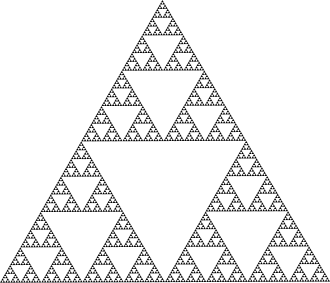 Infinity
"It will be sufficient if, when we speak of infinitely great (or more strictly unlimited), or of infinitely small quantities (i.e., the very least of those within our knowledge) it is understood that we mean quantities that are indefinitely great or indefinitely small, i.e., as great as you please, or as small as you please, so that the error that any one may assign may be less than a certain assigned quantity. Also, since in general it will appear that, when any small error is assigned, it can be shown that it should be less, it follows that the error is absolutely nothing; an almost exactly similar kind of argument is used in different places by Euclid, Theodosius and others; and this seemed to them to be a wonderful thing, although it could not be denied that it was perfectly true that, from the very thing that was assumed as an error, it could be inferred that the error was non-existent. Thus by infinitely great and infinitely small, we understand something indefinitely great, or something indefinitely small, so that each conducts itself as a sort of class, and not merely as the last thing of a class. If any one wishes to understand these as the ultimate things, or as truly infinite, it can be done, and that too without falling back upon a controversy about the reality of extensions, or of infinite continuums in general, or of the infinitely small, ay, even though he think that such things are utterly impossible; it will be sufficient simply to make use of them as a tool that has advantages for the purpose of the calculation, just as the algebraists retain imaginary roots with great profit. For they contain a handy means of reckoning, as can manifestly be verified in every case in a rigorous manner by the method already stated. But it seems right to show this a little more clearly, in order that it may be confirmed that the algorithm, as it is called, of our differential calculus, set forth by me in the year 1684, is quite reasonable."
Infinity is something which is boundless, limitless, or endless. It is denoted by ∞, called the infinity symbol.
"All this arguing of infinities is but the ambition of school boys."
Infinity"The Pythagoreans associated good and evil with the limited and unlimited, respectively."
Infinity"And in that moment, I swear we were infinite."
Infinity"We cannot say that the infinite has no effect, and the only effectiveness which we can ascribe to it is that of a principle. Everything is either a source or derived from a source. But there cannot be a source of the infinite or limitless, for that would be a limit of it. Further, as it is a beginning, it is both uncreatable and indestructible. For there must be a point at which what has come to be reaches completion, and also a termination of all passing away. That is why, as we say, there is no principle of this, but it is this which is held to be the principle of other things, and to encompass all and to steer all, as those assert who do not recognize, alongside the infinite, other causes, such as Mind or Friendship. Further they identify it with the Divine, for it is deathless and imperishable as Anaximander says, with the majority of the physicists."
Infinity"Dans chaque point réel, qui fait une Monade... il y pourroit lire encor tout le passé, et même tout lavenir infiniment infini, puisque chaque moment contient une infinité de choses , et quil y a une infinité de momens dans chaque partie du temps, et une infinité dheures, dannées, de siecles, deônes, dans toute léternité future. Quelle infinité dinfinités infiniment répliquée, quel monde, quel univers dans quelque corpuscule quon pourroit assigner."
Infinity"Heisuke Hironaka, as quoted by Allyn Jackson: (quote from p. 1019)"
Infinity