Quote
"O my LORD, I am not eloquent, neither heretofore, nor since thou hast spoken unto thy servant: but I am slow of speech, and of a slow tongue."
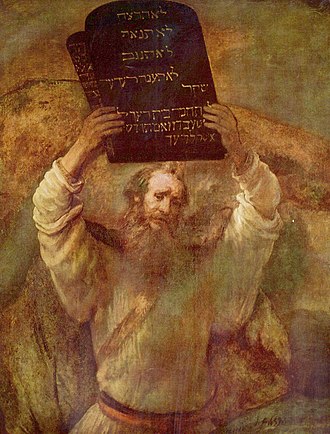 Moses
Moses"Let us therefore be more considerate builders, more wise in spiritual architecture, when great reformation is expected. For now the time seems come, wherein Moses the great prophet may sit in heaven rejoicing to see that memorable and glorious wish of his fulfilled, when not only our seventy elders, but all the Lord’s people are become prophets."
In Abrahamic religions, Moses was the Hebrew prophet who led the Israelites out of slavery in the Exodus from Egypt. He is considered the most important prophet in Judaism and Samaritanism, and one of the most important prophets in Christianity, Islam, the Baháʼí Faith, and other Abrahamic religions. According to the Abrahamic scriptures, God dictated the Mosaic Law to Moses, which he wrote down a
"O my LORD, I am not eloquent, neither heretofore, nor since thou hast spoken unto thy servant: but I am slow of speech, and of a slow tongue."
Moses"And it came to pass, when Moses came down from mount Sinai with the two tables of testimony in Moses hand, when he came down from the mount, that Moses wist not that the skin of his face shone while he talked with him. And when Aaron and all the children of Israel saw Moses, behold, the skin of his face shone; and they were afraid to come nigh him."
Moses"And when Moses came at Our appointed time and his Lord spoke to him, he said: My Lord, show me (Thyself) so that I may look at Thee. He said: Thou canst not see Me; but look at the mountain; if it remains firm in its place, then wilt thou see Me. So when his Lord manifested His glory to the mountain, He made it crumble and Moses fell down in a swoon. Then when he recovered, he said.: Glory be to Thee! I turn to Thee, and I am the first of the believers."
Moses"And Pharaohs wife said: A refreshment of the eye to me and to thee – slay him not; maybe he will be useful to us, or we may take him for a son. And they perceived not."
Moses"In calling his two sons by the names of Gershom and Eliezer, Moses, like Joseph and other righteous men, intended to have the fact of Gods help constantly before him. Since his sons would be with him, and he would often address them or call them by name, he would remember his gratitude to God."
Moses"I pray thee, if I have found grace in thy sight, shew me now thy way, that I may know thee, that I may find grace in thy sight: and consider that this nation is thy people."
Moses