SHAWORDS

Logical positivism was progressive compared with the classical positiv — Mario Bunge

HomeMario BungeQuote
"Logical positivism was progressive compared with the classical positivism of Ptolemy, Hume, dAlembert, Compte, John Stuart Mill, and Ernst Mach. It was even more so by comparison with its contemporary rivals—, , , , , and existentialism. However, neo-positivism failed dismally to give a faithful account of science, whether natural or social. It failed because it remained anchored to sense-data and to a phenomenalist metaphysics, overrated the power of induction and underrated that of hypothesis, and denounced realism and materialism as metaphysical nonsense. Although it has never been practiced consistently in the advanced natural sciences and has been criticized by many philosophers, notably Popper (1959 [1935], 1963), logical positivism remains the tacit philosophy of many scientists. Regrettably, the anti-positivism fashionable in the metatheory of social science is often nothing but an excuse for sloppiness and wild speculation."
Mario Bunge
Mario Bunge
Mario Bunge
author9 quotes

Mario Augusto Bunge was an Argentine-Canadian philosopher and physicist. His philosophical writings combined scientific realism, systemism, materialism, emergentism, and other principles.

More by Mario Bunge

View all →
Quote
"When in the sciences or techniques one states that a certain problem is unsolvable, a rigorous demonstration of such unsolvability is required. And when a scientist submits an article to publication, the least that its referees demand is that it be intelligible. Why? Because rational beings long for understanding and because only clear statements are susceptible to be put to examination to verify whether they are true or false. In the Humanities it is the same, or it should be, but it is not always so. Nietzsche reproached John Stuart Mills clarity. Henri Bergson, although an intuitionist himself, wrote clearly and declared that "clarity is the philosophers courtesy". Obscurity is rude, because it assumes the interlocutor is incapable of understanding and dialoguing."
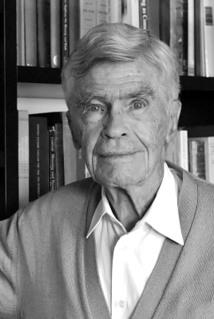
Mario BungeMario Bunge
Quote
"We all would to know more and, at the same time, to receive less information. In fact, the problem of a worker in todays knowledge industry is not the scarcity of information but its excess. The same holds for professionals: just think of a physician or an executive, constantly bombarded by information that is at best irrelevant. In order to learn anything we need time. And to make time we must use information filters allowing us to ignore most of the information aimed at us. We must ignore much to learn a little."
Mario BungeMario Bunge