SHAWORDS

Many great civilisations have fallen, leaving nothing but cracked ruin — David Eagleman

"Many great civilisations have fallen, leaving nothing but cracked ruins and scattered genetics. Usually this results from: natural disasters, resource depletion, economic meltdown, disease, poor information flow and corruption. But we’re luckier than our predecessors because we command a technology that no one else possessed: a rapid communication network that finds its highest expression in the internet. I propose that there are six ways in which the net has vastly reduced the threat of societal collapse."
David Eagleman
David Eagleman
David Eagleman
author

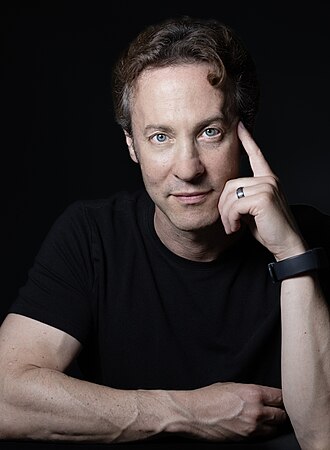
David Eagleman is an American neuroscientist, bestselling author, and science communicator. He teaches neuroscience at Stanford University and has founded several neurotech startups. He directs the non-profit Center for Science and Law, which seeks to align the legal system with modern neuroscience. He is known for his work on brain plasticity, time perception, synesthesia, and neurolaw.

More by David Eagleman

View all →
Quote
"Our ignorance of the cosmos is too vast to commit to atheism, and yet we know too much to commit to a particular religion. A third position, agnosticism, is often an uninteresting stance in which a person simply questions whether his traditional religious story (say, a man with a beard on a cloud) is true or not true. But with Possibilianism I’m hoping to define a new position — one that emphasizes the exploration of new, unconsidered possibilities. Possibilianism is comfortable holding multiple ideas in mind; it is not interested in committing to any particular story."
David EaglemanDavid Eagleman
Quote
"Censorship of ideas was a familiar spectre in the last century, with state-approved news outlets ruling the press, airwaves and copying machines in the USSR, Romania, Cuba, China, Iraq and elsewhere. In many cases, such as Lysenko’s agricultural despotism in the USSR, it directly contributed to the collapse of the nation. Historically, a more successful strategy has been to confront free speech with free speech — and the internet allows this in a natural way. It democratises the flow of information by offering access to the newspapers of the world, the photographers of every nation, the bloggers of every political stripe. Some posts are full of doctoring and dishonesty whereas others strive for independence and impartiality — but all are available to us to sift through. Given the attempts by some governments to build firewalls, it’s clear that this benefit of the net requires constant vigilance."
David EaglemanDavid Eagleman
Quote
"But just like voices, thoughts are underpinned by physical stuff. We know this because alterations to the brain change the kinds of thoughts we can think. In a state of deep sleep, there are no thoughts. When the brain transitions into dream sleep, there are unbidden, bizarre thoughts. During the day we enjoy our normal, well-accepted thoughts, which people enthusiastically modulate by spiking the chemical cocktails of the brain with alcohol, narcotics, cigarettes, coffee, or physical exercise. The state of the physical material determines the state of the thoughts. And the physical material is absolutely necessary for normal thinking to tick along. If you were to injure your pinkie in an accident you’d be distressed, but your conscious experience would be no different. By contrast, if you were to damage an equivalently sized piece of brain tissue, this might change your capacity to understand music, name animals, see colors, judge risk, make decisions, read signals from your body, or understand the concept of a mirror—thereby unmasking the strange, veiled workings of the machinery beneath. Our hopes, dreams, aspirations, fears, comic instincts, great ideas, fetishes, senses of humor, and desires all emerge from this strange organ—and when the brain changes, so do we. So although it’s easy to intuit that thoughts don’t have a physical basis, that they are something like feathers on the wind, they in fact depend directly on the integrity of the enigmatic, three-pound mission control center."
David EaglemanDavid Eagleman