SHAWORDS

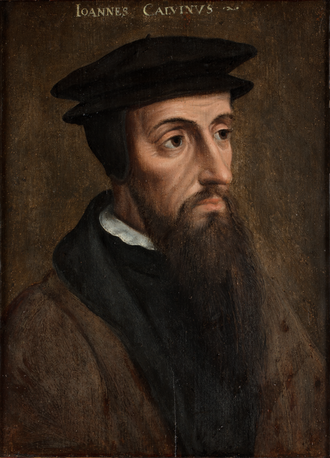
Moreover, a true Christian will not ascribe any prosperity to his own — John Calvin

HomeJohn CalvinQuote
"Moreover, a true Christian will not ascribe any prosperity to his own diligence, industry, or good fortune, but he will acknowledge that God is the author of it."
John Calvin
John Calvin
John Calvin
author139 quotes

John Calvin was a French theologian, pastor and reformer in Geneva during the Protestant Reformation. He was the principal figure in the development of the system of Christian theology later called Calvinism, including its doctrines of predestination and of God's absolute sovereignty in the salvation of the human soul from death and eternal damnation. Calvinist doctrines were influenced by and ela

More by John Calvin

View all →
Quote
"While Calvin in his preaching did not follow a lectionary of prescribed scripture readings for each Sunday of the year, his preaching did usually follow a previously publicized order of scripture selections, e.g., a series of sermons on the Ten Commandments, or on the Beatitudes, or even on a sequential selection of Psalms. In that sense Calvin used a prescribed lectionary (of sorts) which at least some of his hearers might have studied in preparation for listening to his sermons. On the other hand, the 17th century English Puritan Presbyterian and Congregational preachers (who were the principal models for the 18th century Virginia traveling preachers) just "took (any) text and preached from it."
John CalvinJohn Calvin
Quote
"Now let us consider how many relics of the true cross there are in the world. An account of those merely with which I am acquainted would fill a whole volume, for there is not a church, from a cathedral to the most miserable abbey or parish church, that does not contain a piece. Large splinters of it are preserved in various places, as for instance in the Holy Chapel at Paris, whilst at Rome they show a crucifix of considerable size made entirely, they say, from this wood. In short, if we were to collect all these pieces of the true cross exhibited in various parts, they would form a whole ships cargo. The Gospel testifies that the cross could be borne by one single individual;.."
John CalvinJohn Calvin
Quote
"Ainsi, ou nous arguerons lhistoire de mensonge, ou ce quon tient aujourdhui de la vraie croix est une opinion vaine et frivole. Or, avisons dautre part combien il y en a de pièces par tout le monde. Si je voulais réciter seulement ce que jen pourrais dire, il y aurait un rôle pour remplir un livre entier. Il ny a si petite ville où il ny en ait, non seulement en léglise cathédrale, mais en quelques paroisses. Pareillement, il ny a si méchante abbaye où on nen montre. Et en quelques lieux, il y en a de bien gros éclats, comme à la Sainte-Chapelle de Paris, et à Poitiers et à Rome, où il y en a un crucifix assez grand qui en est fait, comme lon dit. Bref, si on voulait ramasser tout ce qui sen est trouvé, il y en aurait la charge dun bon grand bateau. LÉvangile testifie que la croix pouvait être portée dun homme."
John CalvinJohn Calvin
Quote
"The proper course, therefore, is, in the first instance, to ascertain and examine the doctrine which is said by the Evangelist to precede; then after it has been proved, but not till then, it may receive confirmation from miracles. But the mark of sound doctrine given by our Saviour himself is its tendency to promote the glory not of men, but of God (John 7:18; 8:50). Our Saviour having declared this to be test of doctrine, we are in error if we regard as miraculous, works which are used for any other purpose than to magnify the name of God."
John CalvinJohn Calvin

More on Dil

View all →
Quote
"Mister Toombs was willing to dissolve the Union to save slavery, Mister Phillips, to save liberty; while Mister Seward, denounced and derided by both, declared that the deepest instinct of the American people was for union. Reserved rights. State rights, limited powers, the advantages of union and disunion, were the cucumbers from which we were busily engaged in distilling light, overlooking the fact of nationality in discussing the conditions of union. We were speculating upon costume. We gravely proved that the clothes were the clothes of a woman, or of a child, without seeing that whatever the clothes might be there was a full-grown man inside of them. "The Constitution is a contract between sovereign States", shouted Mister Toombs, "let Georgia tear it and separate". "The Constitution is a league with hell", calmly replied Mister Phillips, "let New York cut off New Orleans to rot alone". "Oh, dear! it"s a dreadful dilemma", whimpered President Buchanan. "States have no right to secede, and the United States have no right to coerce. Oh, dear me! it"s perfectly awful! I"m the most patriotic of men, but what shall I do? what shall I do?" Separate! Cut off! Secede! It was of a living body they spoke, which, pierced anywhere, quivered everywhere."
Wendell PhillipsWendell Phillips
Quote
"Its never a matter of ethics versus pragmatism; its a question of which informs the other. Humans have shown themselves capable of almost unlimited imagination and innovation—qualities that could be said to define human beings. People have used this capacity to do both great good and great harm. The point is that when humans set their minds to doing something, its frequently possible. It makes sense to first ask what people want to do and why, from an ethical standpoint, and then get to the pragmatic how-to questions. The very process of asking whats right is how people fill out ethics in praxis, to meet new demands and dilemmas, new social conditions and contexts. Anarchism, then, brings an egalitarian ethics out into the world, making it transparent, public, and shared. It maintains an ethical orientation, while continually trying to put such notions into practice, as flawed as the effort might be. When other people come into contact with this ethical compass, they will hopefully "get it" and incorporate the same values into their lives, because it works. It offers directionality to political involvement and buttresses peoples efforts to remake society. It turns surviving into thriving. Thats the crucial difference between a pragmatic versus ethical impulse: people, in cooperative concert, qualitatively transform one anothers lives."
E
Ethics
Quote
"Thats... the big discovery of this principle of computational equivalence of mine. ...This is something which is kind of a follow-on to Gödels theorem, to Turings work on the ... that there is this fundamental limitation built into science, this idea of computational irreducibility that says that even though you may know the rules by which something operates, that does not mean that you can readily... be smarter that it and jump ahead and figure out what its going to do."
S
Stephen Wolfram
Quote
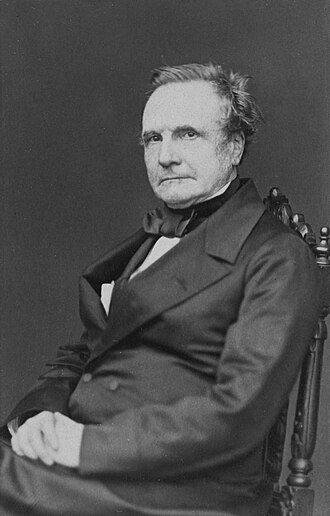
"The establishment of "The Times" newspaper is an example, on a large scale, of a manufactory in which the division of labour, both mental and bodily, is admirably illustrated, and in which also the effect of domestic economy is well exemplified. It is scarcely imagined, by the thousands who read that paper in various quarters of the globe, what a scene of organized activity the factory presents during the whole night, or what a quantity of talent and mechanical skill is put in action for their amusement and information."
Charles BabbageCharles Babbage