SHAWORDS

Mutual aid, even though it may represent one of the factors of evoluti — Peter Kropotkin

"Mutual aid, even though it may represent one of the factors of evolution, covers nevertheless one aspect only of human relations; that by the side of this current, powerful though it may be, there is, and always has been, the other current — the self-assertion of the individual, not only in its efforts to attain personal or caste superiority, economical, political, and spiritual, but also in its much more important although less evident function of breaking through the bonds, always prone to become crystallized, which the tribe, the village community, the city, and the State impose upon the individual. In other words, there is the self-assertion of the individual taken as a progressive element. It is evident that no review of evolution can be complete, unless these two dominant currents are analyzed. However, the self-assertion of the individual or of groups of individuals, their struggles for superiority, and the conflicts which resulted therefrom, have already been analyzed, described, and glorified from time immemorial. In fact, up to the present time, this current alone has received attention from the epical poet, the annalist, the historian, and the sociologist. History, such as it has hitherto been written, is almost entirely a description of the ways and means by which theocracy, military power, autocracy, and, later on, the richer classes rule have been promoted, established, and maintained."
P
Peter Kropotkin
Peter Kropotkin
author134 quotes

Pyotr Alexeyevich Kropotkin was a Russian anarchist political philosopher and geographer known as a proponent of anarchist communism.

More by Peter Kropotkin

View all →
Quote
"These societies already begin to encroach everywhere on the functions of the State, and strive to substitute free action of volunteers for that of a centralized State. In England we see arise insurance companies against theft; societies for coast defense, volunteer societies for land defense, which the State endeavors to get under its thumb, thereby making them instruments of domination, although their original aim was to do without the State. Were it not for Church and State, free societies would have already conquered the whole of the immense domain of education. And, in spite of all difficulties, they begin to invade this domain as well, and make their influence already felt. And when we mark the progress already accomplished in that direction, in spite of and against the State, which tries by all means to maintain its supremacy of recent origin; when we see how voluntary societies invade everything and are only impeded in their development by the State, we are forced to recognize a powerful tendency, a latent force in modern society."
P
Peter Kropotkin
Quote
"A soon as we study animals — not in laboratories and museums only, but in the forest and prairie, in the steppe and in the mountains — we at once perceive that though there is an immense amount of warfare and extermination going on amidst various species, and especially amidst various classes of animals, there is, at the same time, as much, or perhaps even more, of mutual support, mutual aid, and mutual defence amidst animals belonging to the same species or, at least, to the same society. Sociability is as much a law of nature as mutual struggle. Of course it would be extremely difficult to estimate, however roughly, the relative numerical importance of both these series of facts. But if we resort to an indirect test, and ask Nature: "Who are the fittest: those who are continually at war with each other, or those who support one another?" we at once see that those animals which acquire habits of mutual aid are undoubtedly the fittest. They have more chances to survive, and they attain, in their respective classes, the highest development and bodily organization. If the numberless facts which can be brought forward to support this view are taken into account, we may safely say that mutual aid is as much a law of animal life as mutual struggle; but that as a factor of evolution, it most probably has a far greater importance, inasmuch as it favors the development of such habits and characters as insure the maintenance and further development of the species, together with the greatest amount of welfare and enjoyment of life for the individual, with the least waste of energy."
P
Peter Kropotkin

More on Dua

View all →
Quote
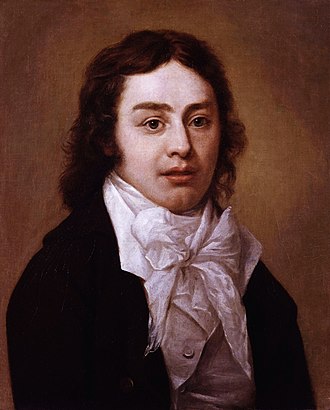
"As in respect of the first wonder we are all on the same level, how comes it that the philosophic mind should, in all ages, be the privilege of a few? The most obvious reason is this: The wonder takes place before the period of reflection, and (with the great mass of mankind) long before the individual is capable of directing his attention freely and consciously to the feeling, or even to its exciting causes. Surprise (the form and dress which the wonder of ignorance usually puts on) is worn away, if not precluded, by custom and familiarity."
Samuel Taylor ColeridgeSamuel Taylor Coleridge