Quote
"People don’t fear the wind until it fells a tree. Then, they say it’s too much."
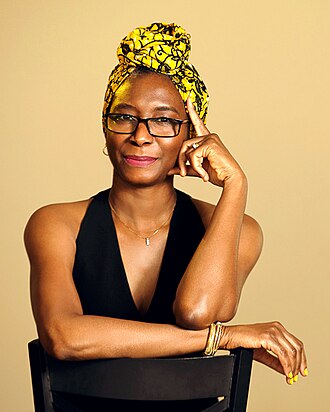 Sefi Atta
"No. I’ve never even read a Le Carré novel, but I slept with a few in a bookcase behind my headboard. My mother was a Le Carré fan. I studied Graham Greene’s The Power and the Glory when I was at school in England, which turned me into a fan of his prose. I realise my novel ventures into white male territory by playing with the idea of espionage and satirising high society. When you do that as an African woman writer, someone is bound to ask, “Why are you here? Have you lost your way? Do you know where you are going?” But I was raised by a woman whose experiences were not limited by her gender or nationality."
Sefi Atta is a Nigerian-American novelist, short-story writer, playwright and screenwriter. Her books have been translated into many languages, her radio plays have been broadcast by the BBC, and her stage plays have been performed internationally.
"People don’t fear the wind until it fells a tree. Then, they say it’s too much."
Sefi Atta"It occurred to me that there was nothing more precious than satisfaction. That it was possible to end up committing a crime just because you were contaminated by a little discontent. You could convince yourself that you were satisfied, then someone could come along and say, But I can offer you more, and then you could begin to think, My life is not worth much after all. In fact, you could tell yourself, My life was completely worthless from the start."
Sefi Atta"I dont have much of an imagination, but I have a mind bank of details, which I play with. Its how I daydream, so writing like that is natural for me."
Sefi Atta"You dont need attention to write. All you need is passion for your work and an overwhelming desire to tell a story you genuinely care about. Readers can sense your sincerity and it separates you from pretenders."
Sefi Atta"She drinks her Eva water. Their parents were taken down by cancer, heart attacks and strokes. Respectable diseases."
Sefi Atta"Cooking was a skill, I thought; an art form. In our country, we appreciated the end result, but not the craft, perhaps because we didn’t have fancy names. Paring was “cut it.” Julienne was “cut it well.” Chopping was “cut it well well,” and so on till you had puree, which would probably be “mash it.” And, if anyone was measuring any ingredient in a kitchen, it meant that they really didn’t know what they were doing."
Sefi Atta