SHAWORDS

Of course, we must avoid postulating a new element for each new phenom — David Bohm

HomeDavid BohmQuote
"Of course, we must avoid postulating a new element for each new phenomenon. But an equally serious mistake is to admit into the theory only those elements which can now be observed. For the purpose of a theory is not only to correlate the results of observations that we already know how to make, but also to suggest the need for new kinds of observations and to predict their results. In fact, the better a theory is able to suggest the need for new kinds of observations and to predict their results correctly, the more confidence we have that this theory is likely to be good representation of the actual properties of matter and not simply an empirical system especially chosen in such a way as to correlate a group of already known facts."
David Bohm
David Bohm
David Bohm
author50 quotes

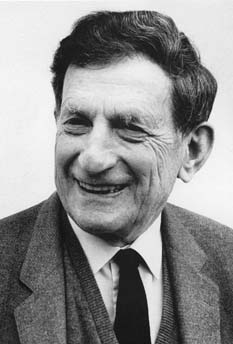
David Joseph Bohm was an American physicist who has been described as one of the most significant theoretical physicists of the 20th century and who contributed unorthodox ideas to quantum theory, neuropsychology and the philosophy of mind. Among his many contributions to physics is his causal and deterministic interpretation of quantum theory known as De Broglie–Bohm theory.

More by David Bohm

View all →
Quote
"Then there is the further question of what is the relationship of thinking to reality. As careful attention shows, thought itself is in an actual process of movement. That is to say, one can feel a sense of flow in the stream of consciousness not dissimilar to the sense of flow in the movement of matter in general. May not thought itself thus be a part of reality as a whole? But then, what could it mean for one part of reality to know another, and to what extent would this be possible?"
David BohmDavid Bohm

More on Time

View all →
Quote
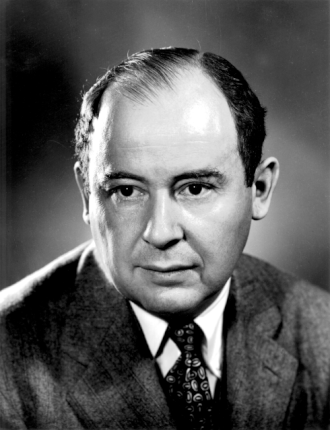
"Most mathematicians prove what they can, von Neumann proves what he wants." Once in a discussion about the rapid growth of mathematics in modern times, von Neumann was heard to remark that whereas thirty years ago a mathematician could grasp all of mathematics, that is impossible today. Someone asked him: "What percentage of all mathematics might a person aspire to understand today?" Von Neumann went into one of his five-second thinking trances, and said: "About 28 percent."
John von NeumannJohn von Neumann