Quote
"You should keep in mind no names, nor numbers, nor isolated incidents, not even results, but only methods. The method is plastic. It is applicable in every situation."
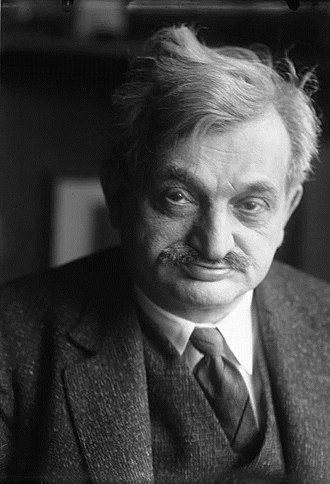 Emanuel Lasker
"On the chessboard, lies and hypocrisy do not survive long. The creative combination lays bare the presumption of a lie; the merciless fact, culminating in the checkmate, contradicts the hypocrite."
Emanuel Lasker was a German chess player, mathematician, and philosopher. He was the second World Chess Champion, holding the title for 27 years, from 1894 to 1921, the longest reign of any officially recognised World Chess Champion, winning 6 World Chess Championships. In his prime, Lasker was one of the most dominant champions.
"You should keep in mind no names, nor numbers, nor isolated incidents, not even results, but only methods. The method is plastic. It is applicable in every situation."
Emanuel Lasker"That Lasker was a great fighter is an observation which is common to all studies of his play. Nobody can estimate what enormous will-power went into Laskers fighting ability; and yet at the core of this quality was his belief that each position is unique, that it has some hidden aspect which the skeptic, the man of resource, will finally unearth."
Emanuel Lasker"It is no easy matter to reply correctly to Laskers bad moves."
Emanuel Lasker"Dr. Tarrasch is a thinker, fond of deep and complex speculation. He will accept the efficacy and usefulness of a move if at the same time he considers it beautiful and theoretically right. But I accept that sort of beauty only if and when it happens to be useful. He admires an idea for its depth, I admire it for its efficacy. My opponent believes in beauty, I believe in strength. I think that by being strong, a move is beautiful too."
Emanuel Lasker"He who wants to educate himself in Chess must evade what is dead in Chess — artificial theories, supported by few instances and upheld by an excess of human wit; the habit of playing with inferior opponents; the custom of avoiding difficult tasks; the weakness of uncritically taking over variations or rules discovered by others; the vanity which is self-sufficient; the incapacity for admitting mistakes; in brief, everything that leads to a standstill or to anarchy."
Emanuel Lasker"Education in Chess has to be an education in independent thinking and judgement. Chess must not be memorized, simply because it is not important enough. If you load your memory you should know why. Memory is too valuable to be stocked with trifles. Of my fifty-seven years I have applied at least thirty to forgetting most of what I had learned or read, and since I succeeded in this I have acquired a certain ease and cheer which I should never again like to be without. If need be, I can increase my skill in Chess, if need be I can do that of which I have no idea at present. I have stored little in my memory, but I can apply that little, and it is of good use in many and varied emergencies. I keep it in order, but resist every attempt to increase its dead weight."
Emanuel Lasker