SHAWORDS

Only when these first two elements are joined to a third does the comb — James C. Scott

"Only when these first two elements are joined to a third does the combination become potentially lethal. The third element is an authoritarian state that is willing and able to use the full weight of its coercive power to bring these high-modernist designs into being. The most fertile soil for this element has typically been times of war, revolution, depression, and struggle for national liberation. In such situations, emergency conditions foster the seizure of emergency powers and frequently delegitimize the previous regime. They also tend to give rise to elites who repudiate the past and who have revolutionary designs for their people. A fourth element is closely linked to the third: a prostrate civil society that lacks the capacity to resist these plans. War, revolution, and economic collapse often radically weaken civil society as well as make the populace more receptive to a new dispensation. Late colonial rule, with its social engineering aspirations and ability to run roughshod over popular opposition, occasionally met this last condition. In sum, the legibility of a society provides the capacity for large scale social engineering, high-modernist ideology provides the desire, the authoritarian state provides the determination to act on that desire, and an incapacitated civil society provides the leveled social terrain on which to build."
James C. Scott
James C. Scott
James C. Scott
author26 quotes

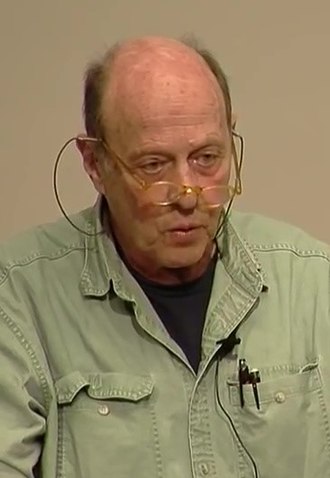
James Campbell Scott was an American political scientist and anthropologist specializing in comparative politics. He was a comparative scholar of agrarian and non-state societies.

More by James C. Scott

View all →
Quote
"Certain forms of knowledge and control require a narrowing of vision. The great advantage of such tunnel vision is that it brings into sharp focus certain limited aspects of an otherwise far more complex and unwieldy reality. This very simplification, in turn, makes the phenomenon at the center of the field of vision more legible and hence more susceptible to careful measurement and calculation. Combined with similar observations, an overall, aggregate, synoptic view of a selective reality is achieved, making possible a high degree of schematic knowledge, control, and manipulation."
James C. ScottJames C. Scott
Quote
"To grasp the prodigious variety of customary ways of measuring land, we would have to imagine literally scores of "maps" constructed along very different lines than mere surface area. I have in mind the sorts of maps devised to capture our attention with a kind of fun-house effect in which, say, the size of a country is made proportional to its population rather than its geographical size, with China and India looming menacingly over Russia, Brazil, and the United States, while Libya, Australia, and Greenland virtually disappear. These types of customary maps (for there would be a great many) would construct the landscape according to units of work and yield, type of soil, accessibility, and ability to provide subsistence, none of which would necessarily accord with surface area. The measurements are decidedly local, interested, contextual, and historically specific. What meets the subsistence needs of one family may not meet the subsistence needs of another. Factors such as local crop regimens, labor supply, agricultural technology, and weather ensure that the standards of evaluation vary from place to place and over time. Directly apprehended by the state, so many maps would represent a hopelessly bewildering welter of local standards. They definitely would not lend themselves to aggregation into a single statistical series that would allow state officials to make meaningful comparisons."
James C. ScottJames C. Scott
Quote
"I shall argue that the most tragic episodes of state-initiated social engineering originate in a pernicious combination of four elements. All four are necessary for a full-fledged disaster. The first element is the administrative ordering of nature and society-the transformative state simplifications described above. By themselves, they are the unremarkable tools of modern statecraft; they are as vital to the maintenance of our welfare and freedom as they are to the designs of a would-be modern despot. They undergird the concept of citizenship and the provision of social welfare just as they might undergird a policy of rounding up undesirable minorities. The second element is what I call a high-modernist ideology. It is best conceived as a strong, one might even say muscle-bound, version of the self-confidence about scientific and technical progress, the expansion of production, the growing satisfaction of human needs, the mastery of nature (including human nature), and, above all, the rational design of social order commensurate with the scientific understanding of natural laws. It originated, of course, in the West, as a by-product of unprecedented progress in science and industry."
James C. ScottJames C. Scott