SHAWORDS

Our vulnerability [to ressentiment], is unavoidable (and probably incu — Max Scheler

HomeMax SchelerQuote
"Our vulnerability [to ressentiment], is unavoidable (and probably incurable) in a kind of society in which relative equality of political and other rights and formally acknowledged social equality go hand in hand with enormous differences in genuine power, possessions and education; a society in which everyone “has the right” to consider himself equal to everybody else, while in fact being unequal to them."
Max Scheler
Max Scheler
Max Scheler
author44 quotes

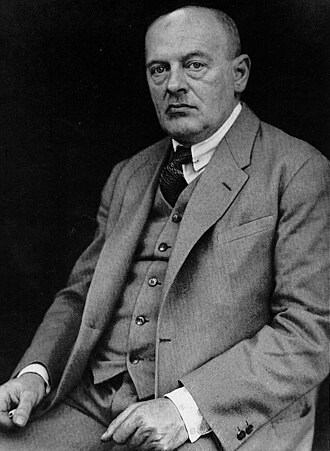
Max Ferdinand Scheler was a German philosopher known for his work in phenomenology, ethics, and philosophical anthropology. Considered in his lifetime one of the most prominent German philosophers, Scheler developed the philosophical method of Edmund Husserl, the founder of phenomenology.

More by Max Scheler

View all →
Quote
"We do not use the word “ressentiment” because of a special predilection for the French language, but because we did not succeed in translating it into German. Moreover, Nietzsche has made it a terminus technicus. In the natural meaning of the French word I detect two elements. First of all, ressentiment is the repeated experiencing and reliving of a particular emotional response reaction against someone else. The continual reliving of the emotion sinks it more deeply into the center of the personality, but concomitantly removes it from the persons zone of action and expression. It is not a mere intellectual recollection of the emotion and of the events to which it “responded”—it is a re-experiencing of the emotion itself, a renewal of the original feeling. Secondly, the word implies that the quality of this emotion is negative, i.e., that it contains a movement of hostility. Perhaps the German word “Groll” (rancor) comes closest to the essential meaning of the term. “Rancor” is just such a suppressed wrath, independent of the egos activity, which moves obscurely through the mind. It finally takes shape through the repeated reliving of intentionalities of hatred or other hostile emotions. In itself it does not contain a specific hostile intention, but it nourishes any number of such intentions."
Max SchelerMax Scheler
Quote
"Existential envy which is directed against the other person’s very nature, is the strongest source of ressentiment. It is as if it whispers continually: “I can forgive everything, but not that you are— that you are what you are—that I am not what you are—indeed that I am not you.” This form of envy strips the opponent of his very existence, for this existence as such is felt to be a “pressure,” a “reproach,” and an unbearable humiliation. In the lives of great men there are always critical periods of instability, in which they alternately envy and try to love those whose merits they cannot but esteem. Only gradually, one of these attitudes will predominate. Here lies the meaning of Goethe’s reflection that “against another’s great merits, there is no remedy but love.”"
Max SchelerMax Scheler
Quote
"The medieval peasant prior to the 13th century does not compare himself to the feudal lord, nor does the artisan compare himself to the knight. … From the king down to the hangman and the prostitute, everyone is “noble” in the sense that he considers himself as irreplaceable. In the “system of free competition,” on the other hand, the notions on life’s tasks and their value are not fundamental, they are but secondary derivations of the desire of all to surpass all the others. No “place” is more than a transitory point in this universal chase."
Max SchelerMax Scheler
Quote
"The “old maid” with her repressed cravings for tenderness, sex, and propagation, is rarely quite free of ressentiment. What we call “prudery,” in contrast with true modesty, is but one of the numerous variants of sexual ressentiment. The habitual behavior of many old maids, who obsessively ferret out all sexually significant events in their surroundings in order to condemn them harshly, is nothing but sexual gratification transformed into ressentiment satisfaction. Thus the criticism accomplishes the very thing it pretends to condemn."
Max SchelerMax Scheler