Quote
"So study evermore is overshot: While it doth study to have what it would, It doth forget to do the thing it should; And when it hath the thing it hunteth most, ’Tis won as towns with fire, so won, so lost."
L
Love's Labour's Lost"Princess: None are so surely caught, when they are catch’d, As wit turn’d fool: folly, in wisdom hatch’d, Hath wisdom’s warrant and the help of school, And wit’s own grace to grace a learned fool. Rosaline: The blood of youth burns not with such excess As gravity’s revolt to wantonness. Maria: Folly in fools bears not so strong a note As foolery in the wise, when wit doth dote; Since all the power thereof it doth apply To prove, by wit, worth in simplicity."
Love's Labour's Lost is one of William Shakespeare's early comedies, believed to have been written in the mid-1590s for a performance at the Inns of Court before Queen Elizabeth I. It follows the King of Navarre and his three companions as they attempt to swear off the company of women for three years in order to focus on study and fasting. Their subsequent infatuation with the Princess of France
"So study evermore is overshot: While it doth study to have what it would, It doth forget to do the thing it should; And when it hath the thing it hunteth most, ’Tis won as towns with fire, so won, so lost."
"Never durst poet touch a pen to write Until his ink were temper’d with Love’s sighs."
"Come on, then; I will swear to study so, To know the thing I am forbid to know: As thus,—to study where I well may dine, When I to feast expressly am forbid; Or study where to meet some mistress fine, When mistresses from common sense are hid."
"Our court shall be a little Academe, Still and contemplative in living art."
"A man in all the world’s new fashion planted, That hath a mint of phrases in his brain."
"Or having sworn too hard a keeping oath, Study to break it, and not break my troth."
"The wound is the place where the Light enters you."
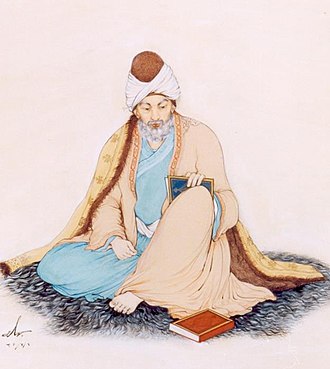 Rumi
Rumi"Be the change that you wish to see in the world."
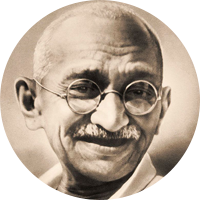 Mahatma Gandhi
"In philosophy equally as in poetry it is the highest and most useful prerogative of genius to produce the strongest impressions of novelty, while it rescues admitted truths from the neglect caused by the very circumstance of their universal admission."
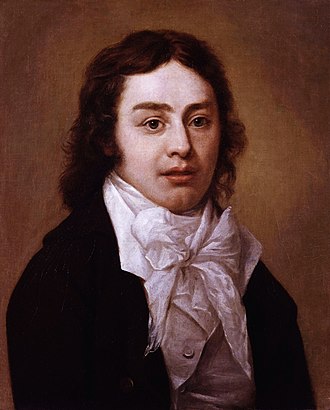 Samuel Taylor Coleridge
"An [hypertext] encyclopaedia will be an overall attempt by the knowledgeable, the learned societies or anyone else, to represent the state-of-the-art in their field. An encyclopaedia will be a living document, as up to date as it can be, instantly accessible at any time. It will contain carefully authored explanations and summaries of the subject, as well as computer-generated indexes of literature. A reference to a paper from the encyclopaedia conveys authority and acceptance by academic society. A measure of a paper’s standing may be conveyed by the number of links it is away from an encyclopaedia."
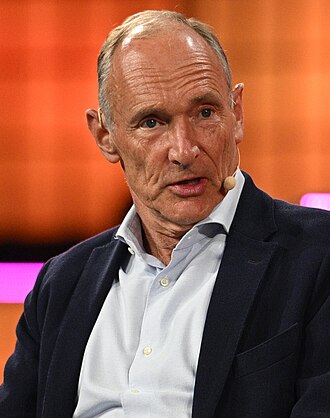 Tim Berners-Lee
"The British intellectual tradition is empirical and liberal, the French is rationalist and aristocratic, and the German is idealist and conservative. ...In the great ontological debate between mind and matter, German philosophy comes down solidly on the side of mind. Its emphasis is intuition as opposed to reason, ideas as opposed to facts."
"To know the mighty works of God, to comprehend His wisdom and majesty and power; to appreciate, in degree, the wonderful workings of His laws, surely all this must be a pleasing and acceptable mode of worship to the Most High, to whom ignorance cannot be more grateful than knowledge."