SHAWORDS

Problems relative to the uniform propagation, or to the varied movemen — Numerical analysis

"Problems relative to the uniform propagation, or to the varied movements of heat in the interior of solids, are reduced ... to problems of pure analysis, and the progress of this part of physics will depend in consequence upon the advance which may be made in the art of analysis. The differential equations . . . contain the chief results of the theory; they express, in the most general and concise manner, the necessary relations of numerical analysis to a very extensive class of phenomena; and they connect forever with mathematical science one of the most important branches of natural philosophy."
Numerical analysis
Numerical analysis
Numerical analysis
author6 quotes

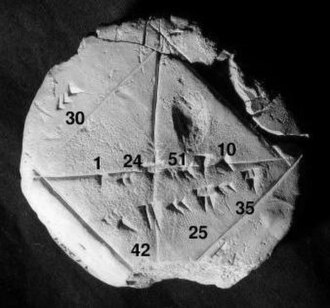
Numerical analysis is the study of algorithms for the problems of continuous mathematics. These algorithms involve real or complex variables, and typically use numerical approximation in addition to symbolic manipulation.

More by Numerical analysis

View all →
Quote
"Numerical analysis is often considered neither beautiful nor, indeed, profound. Pure mathematics is beautiful if your heart goes after the joy of abstraction, applied mathematics is beautiful if you are excited by mathematics as a means to explain the mystery of the world around us. But numerical analysis? Surely, we compute only when everything else fails, when mathematical theory cannot deliver an answer in a comprehensive, pristine form and thus we are compelled to throw a problem onto a number-crunching computer and produce boring numbers by boring calculations. This, I believe, is nonsense."
Numerical analysisNumerical analysis
Quote
"In the 1950s and 1960s, the founding fathers of the field discovered that inexact arithmetic can be a source of danger, causing errors in results that "ought" to be right. The source of such problems is numerical instability: that is, the amplification of rounding errors from microscopic to macroscopic scale by certain modes of computation. These men, including von Neumann, Wilkinson, Forsythe, and Henrici, took great pains to publicize the risks of careless reliance on machine arithmetic. These risks are very real, but the message was communicated all too successfully, leading to the current widespread impression that the main business of numerical analysis is coping with rounding errors. In fact, the main business of numerical analysis is designing algorithms that converge quickly; rounding-error analysis, while often a part of the discussion, is rarely the central issue. If rounding errors vanished, 90% of numerical analysis would remain."
Numerical analysisNumerical analysis
Quote
"The subject of numerical analysis has ancient roots, and it has had periods of intense development followed by long periods of consolidation. In many cases, the new developments have coincided with the introduction of new forms of computing machines. For example, many of the basic theorems about computing solutions of ordinary s were proved soon after desktop adding machines became common at the turn of the 20th century. The emergence of the digital computer in the mid-20th century spurred interest in solving partial differential equations and large systems of linear equations, as well as many other topics. The advent of parallel computers similarly stimulated research on new classes of algorithms. However, many fundamental questions remain open, and the subject is an active area of research today."
Numerical analysisNumerical analysis
Quote
"Mathematical techniques to achieve numerical solutions for partial differential equations began to appear about the turn of the century. The first definitive work was carried out by Richardson, who in a paper delivered to the in London in 1910 introduced a finite-difference technique for numerical solution of . Called a "relaxation technique," that approach is still used today to obtain numerical solutions for so-called s (the equations that govern inviscid subsonic flows are such equations). However, modern numerical analysis is usually considered to have begun in 1928, when Courant, Friedrichs, and Lewy published a definitive paper on the numerical solution of so-called s (the equations that govern inviscid compressible flow are such equations)."
Numerical analysisNumerical analysis