SHAWORDS

Rather than positing design and use as disconnected moments or stages — Wanda Orlikowski

"Rather than positing design and use as disconnected moments or stages in a technologys lifecycle, the structurational model of technology posits artifacts as potentially modifiable throughout their existence. In attempting to understand technology as continually socially and physically constructed, it is useful to discriminate analytically between human action which affects technology and that which is affected by technology. I suggest that we recognize human interaction with technology as having two iterative modes: the design mode and the use mode. I emphasize that this distinction is an analytical convenience only, and that in reality these modes of interaction are tightly coupled."
Wanda Orlikowski
Wanda Orlikowski
Wanda Orlikowski
author6 quotes

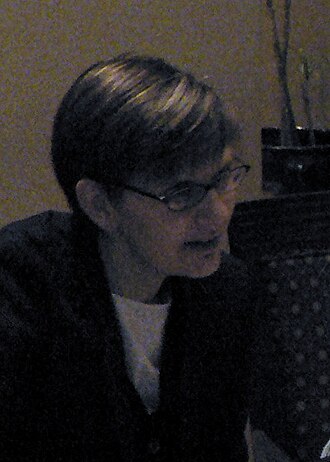
Wanda Janina Orlikowski is a US-based organizational theorist and Information Systems researcher, and the Alfred P. Sloan Professor of Information Technologies and Organization Studies at the MIT Sloan School of Management, Massachusetts Institute of Technology.

More by Wanda Orlikowski

View all →
Quote
"As both technologies and organizations undergo dramatic changes in form and function, organizational researchers are increasingly turning to concepts of innovation, emergence, and improvisation to help explain the new ways of organizing and using technology evident in practice. With a similar intent, I propose an extension to the structurational perspective on technology that develops a practice lens to examine how people, as they interact with a technology in their ongoing practices, enact structures which shape their emergent and situated use of that technology. Viewing the use of technology as a process of enactment enables a deeper understanding of the constitutive role of social practices in the ongoing use and change of technologies in the workplace. After developing this lens, I offer an example of its use in research, and then suggest some implications for the study of technology in organizations."
Wanda OrlikowskiWanda Orlikowski
Quote
"This paper develops a new theoretical model with which to examine the interaction between technology and organizations. Early research studies assumed technology to be an objective, external force that would have deterministic impacts on organizational properties such as structure. Later researchers focused on the human aspect of technology, seeing it as the outcome of strategic choice and social action. This paper suggests that either view is incomplete, and proposes a reconceptualization of technology that takes both perspectives into account. A theoretical model-- the structurational model of technology--is built on the basis of this new conceptualization, and its workings explored through discussion of a field study of information technology. The paper suggests that the reformulation of the technology concept and the structurational model of technology allow a deeper and more dialectical understanding of the interaction between technology and organizations. This understanding provides insight into the limits and opportunities of human choice, technology development and use, and organizational design. Implications for future research of the new concept of technology and structurational model of technology are discussed."
Wanda OrlikowskiWanda Orlikowski
Quote
"Technology - and its relationship to organizational structures, processes, and outcomes - has long been of interest to organizational researchers. Over the years, different research perspectives on technology have developed in parallel with research perspectives on organizations - for example, contingency theory (Woodward 1965, Galbraith 1977, Carter 1984, Daft and Lengel 1986), strategic choice models (Child 1972, Buchanan and Boddy 1983, Davis and Taylor 1986, Zuboff 1988), Marxist studies (Braverman 1974, Edwards 1979, Shaiken 1985, Perrolle 1986), symbolic interactionist approaches (Kling 1991, Prasad 1993), transaction-cost economics (Malone et al. 1987, Ciborra 1993); network analyses (Barley 1990, Burkhardt and Brass 1990, Rice and Aydin 1991), practice theories (Suchman 1987, Button 1993, Hutchins 1995, Orr 1996), and structurational models (Barley 1986, Orlikowski 1992, DeSanctis and Poole 1994)."
Wanda OrlikowskiWanda Orlikowski