SHAWORDS

Sometime the hating has to stop. — Eric Lomax

HomeEric LomaxQuote
"Sometime the hating has to stop."
Eric Lomax
Eric Lomax
Eric Lomax
author6 quotes

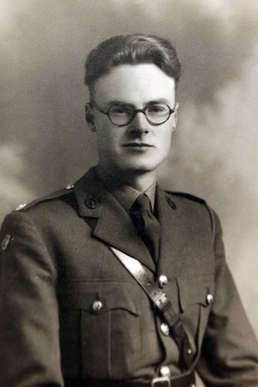
Eric Sutherland Lomax was a British Army officer who was sent to a Japanese prisoner-of-war camp in 1942. He is most notable for his book, The Railway Man, about his experiences before, during, and after World War II, which won the 1996 NCR Book Award and the PEN/Ackerley Prize.

More by Eric Lomax

View all →
Quote
"burnt in a furnace surrounded by water created ; steam confined in a cylinder pushed a , and linked to wheels by rods that turned the straight thrust of the piston into rotatory motion, the moved and worked. The idea that hordes of people and commodities could be carried at such shockingly powerful speeds by a sort of articulated kettle, in which the water could never be allowed to fall below the top of the furnace or there would be an explosion, seemed amazing to me. What made it all so different from todays s, which run at set speeds, was the need to be aware at every moment of the perilous balance of fire and water, which also gave the possibility of going a little faster if the engineman was good, or of disaster if he was incompetent."
Eric LomaxEric Lomax
Quote
"Mr. Lomax, who was born in Scotland, was 19 when he joined the in 1939. He was one of thousands of British soldiers who surrendered to the Japanese in . Many were relocated to Thailand and forced to build the , also known as the Death Railway. ... Mr. Lomax was repeatedly beaten and interrogated after his captors found a radio receiver he had made from spare parts. Multiple bones were broken and water was poured into his nose and mouth. One of his constant torturers stood out: , an interpreter. ... ... He learned that after the war Mr. Nagase had become an interpreter for the Allies and helped locate thousands of graves and mass burial sites along the Burma Railway."
Eric LomaxEric Lomax
Quote
"visited Thailand many times after that, and did charitable work for the surviving Asian labourers, many of whom were unable to return home to India or after the war and dragged out miserable lives in villages near the railway; and he opened a temple of peace on the , and spoke out against . It all seemed admirable, but I read about these things with a surprising sense of detachment. I had expected to feel some more powerful emotion, but apart from the eerie feeling of being present at my own torture as an onlooker I felt empty. And I wondered at his feeling that he had been forgiven. God may have forgiven him, but I had not; mere human forgiveness is another matter."
Eric LomaxEric Lomax
Quote
"Some things that humans make transcend their function; instruments can be magical. That explosive, rhythmic sound we call says more to us about getting under way, about departure, than a can ever do; perhaps it has something close to the beat of our pulse. Even if we were using up and heating the earth too much, and no-one knew that at the time, it would have been worth making an exception for steam engines. They were beautiful machines; the most beautiful machines produced in the ."
Eric LomaxEric Lomax