Quote
"To understand what is coming at you, you need to understand what happened before you."
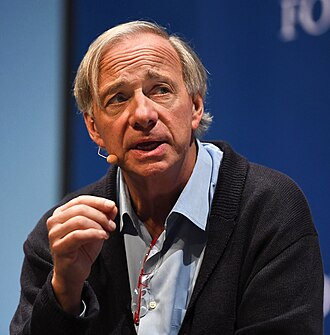 Ray Dalio
"Systemize your decision making."
Raymond Thomas Dalio is an American billionaire and founder of one of the world's largest hedge funds, Bridgewater Associates.
"To understand what is coming at you, you need to understand what happened before you."
Ray Dalio"When central banks print a lot of money to relieve a crisis, buy stocks, gold, and commodities because their value will rise and the value of paper money will fall."
Ray Dalio"Make believability-weighted decisions. ... Operate by principles ... that are so clearly laid out that their principles can be easily assessed and you and others can see if you walk the talk."
Ray Dalio"Think for yourself to decide 1) what you want, 2) what is true, and 3) what you should do to achieve #1 in light of #2 ... and do that with humility and open-mindedness so that you can consider the best thinking available to you."
Ray Dalio"As previously explained, the differences between deleveragings depend on the amounts and paces of 1) debt reduction, 2) austerity, 3) transferring wealth from the haves to the have-nots, and 4) debt monetization. Each one of these four paths reduces debt/income ratios, but they have different effects on inflation and growth. Debt reduction (i.e., defaults and restructurings) and austerity are both deflationary and depressing while debt monetization is inflationary and stimulative. Ugly deleveragings get these out of balance while beautiful ones properly balance them. In other words, the key is in getting the mix right."
Ray Dalio"In a nutshell, poor education, a poor culture (one that impedes people from operating effectively together), poor infrastructure, and too much debt cause bad economic results. The best results come when there is more rather than less of: a) equal opportunity in education and in work, b) good family or family-like upbringing through the high school years, c) civilized behavior within a system that most people believe is fair, and d) free and well-regulated markets for goods, services, labor, and capital that provide incentives, savings, and financing opportunities to most people."
Ray Dalio