SHAWORDS

That sentence is not constructed lightly--it is the measure of a publi — Ted Kennedy

HomeTed KennedyQuote
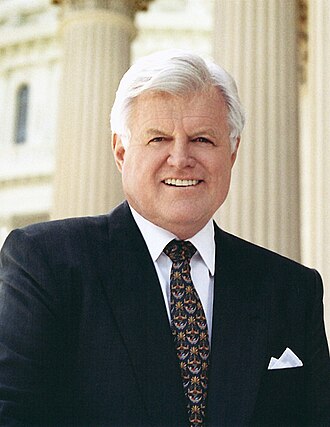
"That sentence is not constructed lightly--it is the measure of a public servant who doesnt know the meaning of the words "you cant pass it"--"it cant happen"--"impossible." It is the measure of a Senator who--on every issue of importance: health care, war and peace, children, education, civil rights, the rights of women--can always be counted on to be in the lead, challenging on the issues, and fighting for the principles which guide a party and lift up our country. From his maiden speech in the Senate demanding an end to the filibuster of the original Civil Rights Act, there has not been a significant policy accomplishment in Washington over four decades that hasnt borne his fingerprints and benefited from his legislative skill and leadership. His is the record of progressive politics in our era. On all the great fights that call us to stand up and be counted, from the minimum wage to Robert Bork and Sam Alito, Ted didnt just hear the call to duty he led the charge."
Ted Kennedy
Ted Kennedy
Ted Kennedy
author138 quotes

Edward Moore Kennedy was an American lawyer and politician who represented Massachusetts in the United States Senate from 1962 until his death in 2009. A member of the Democratic Party, he was the second-most-senior member of the Senate when he died. He is ranked fifth in U.S. history for length of continuous service as a senator. Kennedy was the younger brother of President John F. Kennedy and U.

More by Ted Kennedy

View all →
Quote
"Then there will be the Jeffords amendment, which is a sense of the Senate that does not impose unfunded mandates, of which we are in strong support. Finally, there will be a Gorton amendment to the school-to-work legislation. The Senator from Washington would provide tax credits for the hiring of summer youth. We are in opposition to the Gorton amendment, and there will be a motion to table the amendment. We have tried to work this issue out. There may be changes in the Summer Youth Program, but this amendment would not really provide any kind of accountability, no assurance that at the end of the summer these young people would continue to work. We do not know how decisions would be made as to which companies would be able to get the approval of the young people. So we recommend tabling the Gorton amendment."
Ted KennedyTed Kennedy
Quote
"In sum, I believe that the basic constitutional arguments supporting the power of Congress to change voting qualifications by statute are the same in the case of literacy, residence, or age. So far as I am aware, the Administration proposals in the area of literacy and residence have encountered no substantial opposition on constitutional grounds. Both proposals were incorporated as amendments to the Voting Rights Act in the bill passed by the House of Representatives late last year, and they are now pending before the Senate. If Congress has the authority to act by statute in these areas, as it must if the Administration bill passed by the House is constitutional, then Congress also has the authority to act by statute to lower the voting age to 18. I am hopeful, therefore, that we can achieve broad and bipartisan agreement on the statutory route to reach our vital goal of enlarging the franchise to include 18 year-olds."
Ted KennedyTed Kennedy

More on Education

View all →
Quote
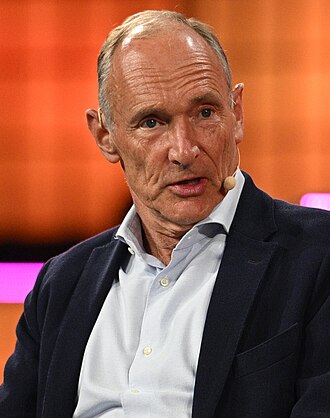
"An [hypertext] encyclopaedia will be an overall attempt by the knowledgeable, the learned societies or anyone else, to represent the state-of-the-art in their field. An encyclopaedia will be a living document, as up to date as it can be, instantly accessible at any time. It will contain carefully authored explanations and summaries of the subject, as well as computer-generated indexes of literature. A reference to a paper from the encyclopaedia conveys authority and acceptance by academic society. A measure of a paper’s standing may be conveyed by the number of links it is away from an encyclopaedia."
Tim Berners-LeeTim Berners-Lee
Quote
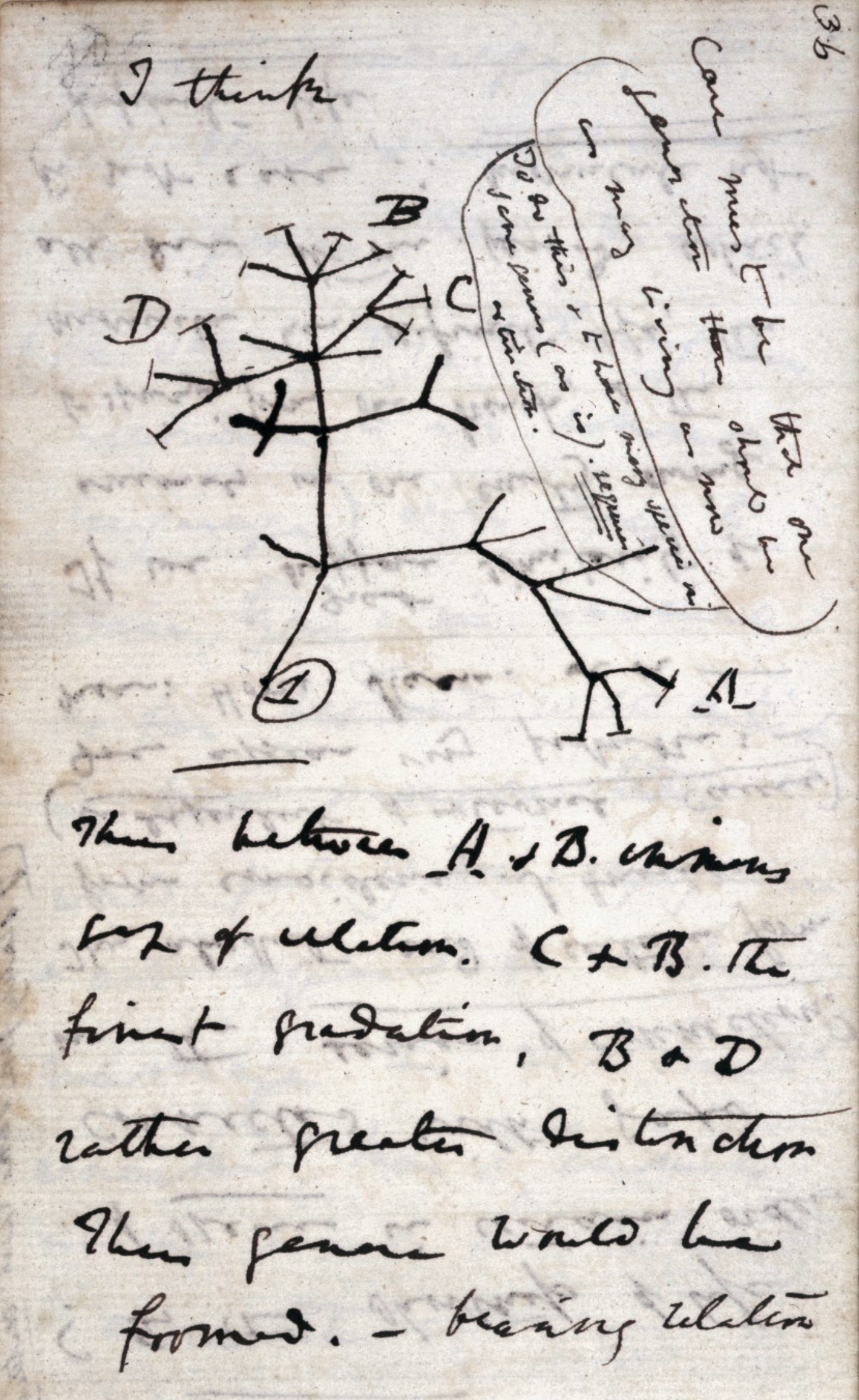
"A sample of the modern debate, which neatly summarizes the anti-reductionist position is provided by Grene (1974). She points out that in principle a one-level ontology—the belief, for example, that with increasing knowledge all science will become an account of the world in the language of, say, atomic events—contradicts itself. This is so because such a belief, to be meaningful, requires an ontology which admits both atomic events and cognition. Here at once a second level is smuggled in! It is logically possible... that there might be no levels in between those of atomic events and cognition (that in essence is Descartess position) but the sciences of chemistry and biology consist of some well-tested conjectures that there are such intermediate levels as are represented by molecules, cells, organelles, organs, and organisms."
O
Ontology
Quote
"All competent thinkers agree with Bacon that there can be no real knowledge except that which rests upon observed facts. This fundamental maxim is evidently indisputable if it is applied, as it ought to be, to the mature state of our intelligence. But, if we consider the origin of our knowledge, it is no less certain that the primitive human mind could not, and indeed ought not to, have thought in that way. For if, on the one hand, every Positive theory must necessarily be founded upon observations, it is, on the other hand, no less true that, in order to observe, our mind has need of some theory or other. If in contemplating phenomena we did not immediately connect them with principles, not only would it be impossible for us to combine these isolated observations, and therefore to derive profit from them, but we should even be entirely incapable of remembering facts, which would for the most remain unnoted by us. Thus there were two difficulties be overcome: the human mind had to observe in order to form real theories, and yet had to form theories of some sort before it could apply itself to a connected series of observations. The primitive human mind, therefore, found itself involved in a vicious circle, from which it would never have had any means of escaping, if a natural way of the difficulty had not fortunately found by the spontaneous development of Theological conceptions. ...chimerical hopes ..exaggerated ideas of mans importance in the universe to which the Theological Philosophy ...at the commencement, ...afforded an indispensable stimulus without the aid which we cannot, indeed, conceive how the primitive human mind would have been induced to undertake any arduous labours."
TheoryTheory