Quote
"Ἀμαθία μὲν θράσος, λογισμὸς δὲ ὄκνον φέρει"
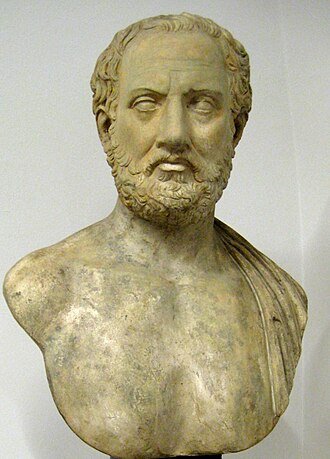 Thucydides
"That war is an evil is a proposition so familiar to every one that it would be tedious to develop it. No one is forced to engage in it by ignorance, or kept out of it by fear, if he fancies there is anything to be gained by it."
Thucydides was an Athenian historian and general. His History of the Peloponnesian War recounts the fifth-century BC war between Sparta and Athens until the year 411 BC. Thucydides has been dubbed the father of "scientific history" by those who accept his claims to have applied strict standards of impartiality and evidence-gathering and analysis of cause and effect, without reference to interventi
"Ἀμαθία μὲν θράσος, λογισμὸς δὲ ὄκνον φέρει"
Thucydides"The real cause I consider to be the one which was formerly most kept out of sight. The growth of the power of Athens, and the alarm which this inspired the Lacedaemon, made war inevitable."
Thucydides"Let him remember that many before now have tried to chastise a wrongdoer, and failing to punish their enemy have not even saved themselves; while many who have trusted in force to gain an advantage, instead of gaining anything more, have been doomed to lose what they had. Vengeance is not necessarily successful because wrong has been done, or strength sure because it is confident; but the incalculable element in the future exercises the widest influence, and is the most treacherous, and yet in fact the most useful of all things, as it frightens us all equally, and thus makes us consider before attacking each other."
Thucydides"Thus they toil on in trouble and danger all the days of their life, with little opportunity for enjoying, being ever engaged in getting: their only idea of a holiday is to do what the occasion demands, and to them laborious occupation is less of a misfortune than the peace of a quiet life. To describe their character in a word, one might truly say that they were born into the world to take no rest themselves and to give none to others."
Thucydides"The fate of those of their neighbours who had already rebelled and had been subdued was no lesson to them; their own prosperity could not dissuade them from affronting danger; but blindly confident in the future, and full of hopes beyond their power though not beyond their ambition, they declared war and made their decision to prefer might to right, their attack being determined not by provocation but by the moment which seemed propitious. The truth is that great good fortune coming suddenly and unexpectedly tends to make a people insolent; in most cases it is safer for mankind to have success in reason than out of reason; and it is easier for them, one may say, to stave off adversity than to preserve prosperity."
Thucydides"They have discovered that the length of time we have now been in commission has rotted our ships and wasted our crews, and that with the completeness of our crews and the soundness of the pristine efficiency of our navy has departed. For it is impossible for us to haul our ships ashore and dry them out because the enemys vessels being as many or more than our own, we are constantly anticipating an attack."
Thucydides