Quote
"Remembrance wakes with all her busy train, Swells at my breast, and turns the past to pain."
 Memory
"The ability to apprehend a small number of items at one time in the conscious mind can be distinguished from the need to attend to items individually when a larger number of such items are presented. This point is one of the earliest to be noted in psychological commentaries on the limitations in capacity. Hamilton (1859) treated this topic at length and noted (vol. 1, p. 254) that two philosophers decided that six items could be apprehended at once, whereas at least one other (Abraham Tucker) decided that four items could be apprehended. He went on to comment: “The opinion [of six] appears to me correct. You can easily make the experiment for yourselves, but you must be aware of grouping the objects into classes. If you throw a handful of marbles on the floor, you will find it difficult to view at once more than six, or seven at most, without confusion; but if you group them into twos, or threes, or fives, you can comprehend as many groups as you can units; because the mind considers these groups only as units, – it views them as wholes, and throws their parts out of consideration. You may perform the experiment also by an act of imagination.” When the experiment actually was conducted, however, it showed that Hamilton’s estimate was a bit high. Many studies have shown that the time needed to count a cluster of dots or other such small items rises very slowly as the number of items increases from one to four, and rises at a much more rapid rate after that. Jevons (1871) was probably the first actual study, noting that Hamilton’s conjecture was “one of the very few points in psychology which can, as far as we yet see, be submitted to experiment.” He picked up handfuls of beans and threw them into a box, glancing at them briefly and estimating their number, which was then counted for comparison. After over a thousand trials, he found that numbers up to four could be estimated perfectly, and up to five with very few errors"
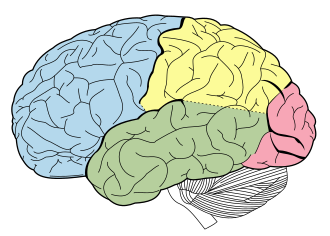
Memory is the faculty of the mind by which data or information is encoded, stored, and retrieved when needed. It is the retention of information over time for the purpose of influencing future action. If past events could not be remembered, it would be impossible for language, relationships, or personal identity to develop. Memory loss is usually described as forgetfulness or amnesia.
"Remembrance wakes with all her busy train, Swells at my breast, and turns the past to pain."
Memory"I have the most ill-regulated memory. It does those things which it ought not to do and leaves undone the things it ought to have done."
Memory"Memory, for me, is often a home where the furniture has been rearranged one too many times."
Memory"Out of mind as soon as out of sight."
Memory"To live in hearts we leave behind, Is not to die."
Memory"Vague memories hang about the mind like cobwebs."
Memory