SHAWORDS

... The Babylonians also realized that specific solar and lunar eclips — Eclipse

HomeEclipseQuote
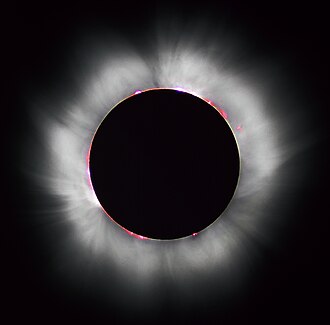
"... The Babylonians also realized that specific solar and lunar eclipses were often separated from a similar event by what Halley called one . To understand this cycle in modern terms, imagine the geometry of celestial bodies at the moment of a solar eclipse, when the moon lies directly between the sun and Earth and all three bodies form a neat line. For this to happen, the moon must be a new moon. It must also be at a point where its own tilted orbit around the Earth is plunging through the plane in which the Earth marches through its own orbit around the sun. Now imagine advancing the clock forward to find a time when these same conditions recur. We have to reconcile several overlapping but unequal lunar cycles. Cycle one: It takes about 29.5306 days to go from one new moon to the next. Cycle two: It takes the moon about 27.2122 days to go from one pass through the plane of Earth’s orbit to the same pass on the next go-round. Cycle three: Because the moon’s elliptical orbit draws it nearer and farther away from Earth, the moon also oscillates its apparent size and speed in the skies over Earth, a cycle that takes about 27.5546 days. The Saros, then, is just a nice round interval during which all these cycles repeat a whole number of times: 223 passes through the new moon is almost exactly equal to 242 laps in and out of the ecliptic, which is in turn almost exactly equal to 239 oscillations in the moon’s apparent size. If you saw a solar or lunar eclipse, just wait one Saros, and the same rough geometric arrangement of the celestial bodies will repeat. The moons orbit is actually more complicated than just these parameters, though. And, regardless, this scheme doesnt tell you where on Earth the resulting eclipse will be visible."
Eclipse
Eclipse
Eclipse
author2 quotes

An eclipse is an astronomical event which occurs when an astronomical object or spacecraft is temporarily obscured, by passing into the shadow of another body or by having another body pass between it and the viewer. This alignment of three celestial objects is known as a syzygy. An eclipse is the result of either an occultation or a transit. A "deep eclipse" is when a small astronomical object is