Quote
"The true dualism I take to be the contrast between two wills, one of which is felt as vital impulse (élan vital) and the other as vital control (frein vital)."
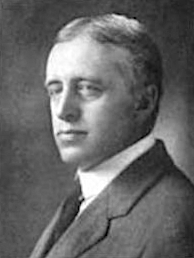 Irving Babbitt
"The complaint is often heard at present that there is an increasing exodus from the difficult and disciplinary subjects and a rush into the soft subjects. One good sign is that those who stand for the difficult and disciplinary subjects, e.g., the professors of physics and the professors of the ancient classics, are coming more and more to see that they must co-operate and not work at cross-purposes, as they have done only too often in the past, if they are to make head against the drift toward softness."
Irving Babbitt was an American academic and literary critic, noted for his founding role in a movement that became known as the New Humanism, a significant influence on literary discussion and conservative thought in the period between 1910 and 1930. He was a cultural critic in the tradition of Matthew Arnold and a consistent opponent of romanticism, as represented by the writings of Jean-Jacques
"The true dualism I take to be the contrast between two wills, one of which is felt as vital impulse (élan vital) and the other as vital control (frein vital)."
Irving Babbitt"Since every man desires happiness, it is evidently no small matter whether he conceives of happiness in terms of work or of enjoyment. If he work in the full ethical sense that I have attempted to define, he is pulling back and disciplining his temperamental self with reference to some standard. In short, his temperamental self is, in an almost literal sense, undergoing conversion. The whole of life may, indeed, be summed up in the words diversion and conversion. Along which of these two main paths are most of us seeking the happiness to the pursuit of which we are dedicated by our Declaration of Independence? The author of this phrase, Thomas Jefferson, remarks of himself: "I am an Epicurean."
Irving Babbitt"Those who are filled with concern for the lot of humanity as a whole, especially for the less fortunate portions of it, are wont nowadays to call themselves idealists. We should at least recognize that ideals in this sense are not the same as standards and that they are often indeed the opposite of standards. It would be easy to mention institutions of learning in this country that are at present engaged in breaking down standards in the name of ideals."
Irving Babbitt"Three or four years ago a distinguished Frenchman, M. Hovelacque, published an article on America in the Revue de Paris in which he maintained that the essential weakness of our American civilization lay in the failure of our education to produce any equivalent of the superior man of Confucius or the καλὸς κἀγαθός of the Greeks."
Irving Babbitt"This higher will is felt in its relation to the impressions and impulses and expansive desires of the natural man as a will to refrain. ... The failure to exercise the will to refrain in some form or degree means spiritual anarchy. A combination such as we are getting more and more at present of spiritual anarchy with an ever-increasing material efficiency—power without wisdom, as one is tempted to put it—is not likely to work either for the happiness of the individual or for the welfare of society."
Irving Babbitt"When we consider carefully what many of our so-called humanists stand for, we find that they are not humanists but humanitarians."
Irving Babbitt