SHAWORDS

THE DOOM SLAYER is an unfettered, chaotic id who only wants to kill de — Zero Punctuation

"THE DOOM SLAYER is an unfettered, chaotic id who only wants to kill demons and find collectible Happy Meal toys; in other words, hes the player of a mindless shooter game. But the central gag of the character is that all the other characters in the plot are looking for meaning and cosmic/religious significance in his actions where none truly exists; he just doesnt give a shit. Thats the joke; very funny, ha ha ha. But in Doom Eternal, when there are entire levels devoted to traipsing through empty hallways learning the history of THE DOOM SLAYER and the origin story for how he came to not give a shit, and were beset by cutscenes and dialogue and codex entries filling us in on the Maykrs of Urdak and their history with the Sentinels of Argent DNur and their long tradition of shit and the not-giving thereof, then suddenly, the game itself is the one projecting unnecessary meaning onto the dude who doesnt actually give a shit, and the joke is at the expense of the story-writers!"
Zero Punctuation
Zero Punctuation
Zero Punctuation
author799 quotes

Zero Punctuation is a series of video game reviews created by English comedy writer and video game journalist Ben "Yahtzee" Croshaw. From its inception in 2007, episodes were published weekly by internet magazine The Escapist. Episodes typically range from five to six minutes in length. Videos provide caustic humour, rapid-fire delivery, visual gags and critical insight into recently released vide

More by Zero Punctuation

View all →
Quote
"The environments do a good job of building atmosphere with eldritch light illuminating the mist that coils around the trees, flickering shadows making an innocent mulberry bush momentarily look like a round-shouldered murderer with an axe and a massive erection. Its just that the game is fully aware that it does dark spooky forests best but little else, so every half hour it has to contrive a new reason for Alan to be lost in a spooky forest at night. Its like a crime drama about a detective who can only concentrate when hes around pastry, so every week the crime has to conveniently take place in a bakery or within walking distance of a pie shop."
Zero PunctuationZero Punctuation
Quote
"See, the rub is that Cuphead is retro-style, but not in the usual sense, i.e., pixels the size of Plymouth; its deliberately fashioning itself after retro animation, in the style of Max Fleischer or very early Disney, and pulls that off with quite remarkable success! The film grain, the scratchy audio, the big brass band soundtrack, the fluid, exaggerated animation where characters all move like warmed-up gummy worms caught in the spokes of a bike; it all feels so bloody authentic! And most importantly, what a lot of people forget about early cartoons — here, we very unsubtly waggle our eyebrows at Epic Mickeys forgotten grave-site — is that they could be really fucking dark. See, back then, it wasnt generally understood that kids needed to have their delicate sensibilities protected, as odds were pretty good they were all going to die in a European trench war before they turned eighteen, anyway. So thematically, cartoons were lighter on wholesome lessons about friendship and heavier on skeletons and racism. So theres something overtly sinister about Cuphead, which might be from subtly wrong things like the drinking straw in our characters head — I mean, the teacup-head thing Id buy, but who the fuck drinks from a teacup with a straw? Thats just pushing it. But I think its the overall scratchy look and feel that makes me think the little girl from The Ring could push out of the screen at any moment and start making comical trombone noises."
Zero PunctuationZero Punctuation

More on Education

View all →
Quote
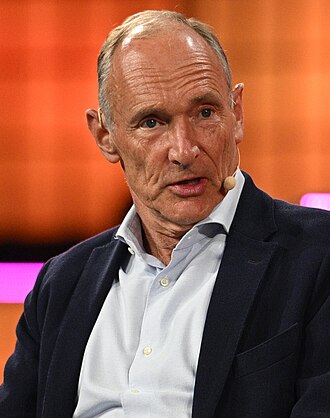
"An [hypertext] encyclopaedia will be an overall attempt by the knowledgeable, the learned societies or anyone else, to represent the state-of-the-art in their field. An encyclopaedia will be a living document, as up to date as it can be, instantly accessible at any time. It will contain carefully authored explanations and summaries of the subject, as well as computer-generated indexes of literature. A reference to a paper from the encyclopaedia conveys authority and acceptance by academic society. A measure of a paper’s standing may be conveyed by the number of links it is away from an encyclopaedia."
Tim Berners-LeeTim Berners-Lee
Quote
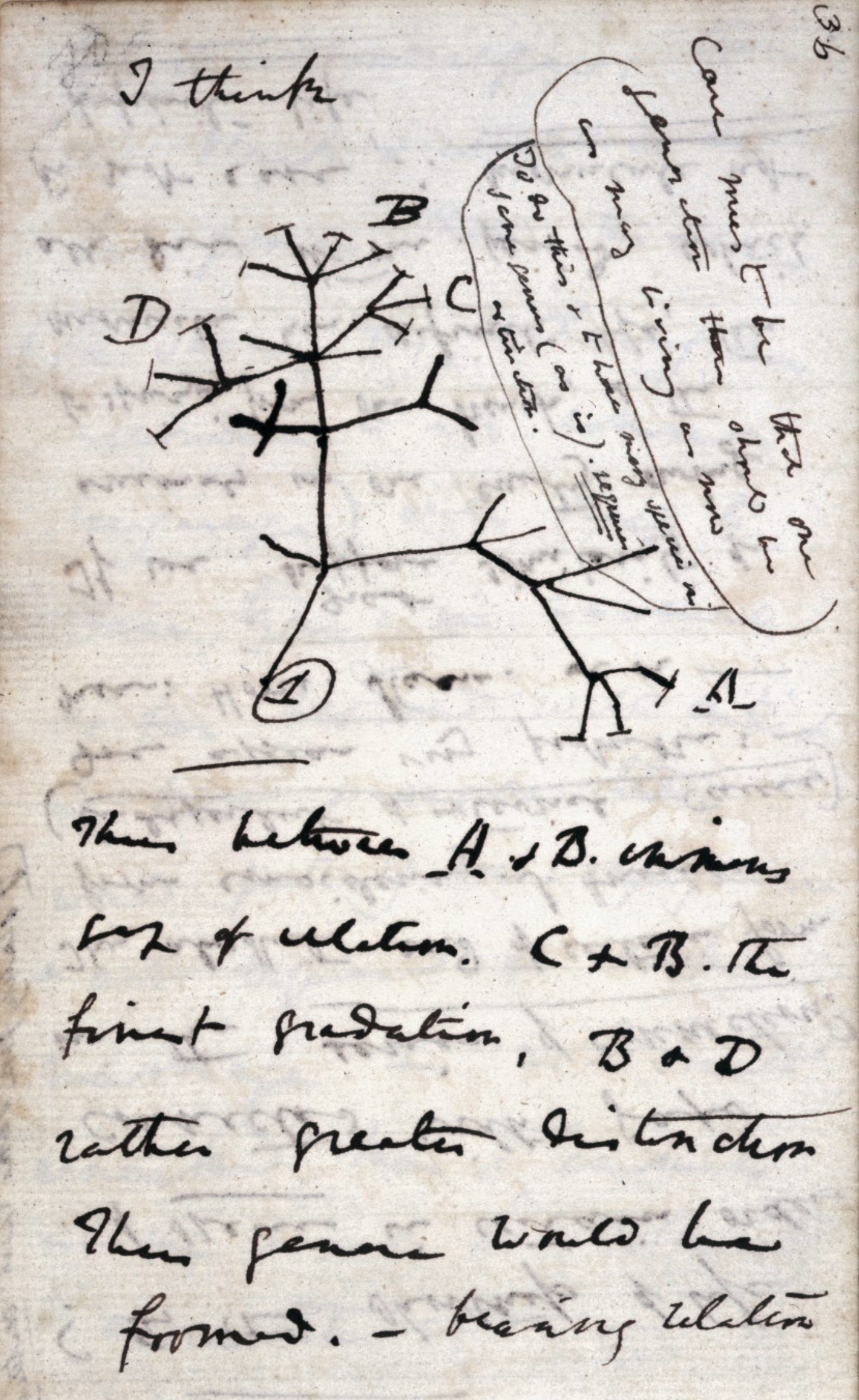
"A sample of the modern debate, which neatly summarizes the anti-reductionist position is provided by Grene (1974). She points out that in principle a one-level ontology—the belief, for example, that with increasing knowledge all science will become an account of the world in the language of, say, atomic events—contradicts itself. This is so because such a belief, to be meaningful, requires an ontology which admits both atomic events and cognition. Here at once a second level is smuggled in! It is logically possible... that there might be no levels in between those of atomic events and cognition (that in essence is Descartess position) but the sciences of chemistry and biology consist of some well-tested conjectures that there are such intermediate levels as are represented by molecules, cells, organelles, organs, and organisms."
O
Ontology
Quote
"All competent thinkers agree with Bacon that there can be no real knowledge except that which rests upon observed facts. This fundamental maxim is evidently indisputable if it is applied, as it ought to be, to the mature state of our intelligence. But, if we consider the origin of our knowledge, it is no less certain that the primitive human mind could not, and indeed ought not to, have thought in that way. For if, on the one hand, every Positive theory must necessarily be founded upon observations, it is, on the other hand, no less true that, in order to observe, our mind has need of some theory or other. If in contemplating phenomena we did not immediately connect them with principles, not only would it be impossible for us to combine these isolated observations, and therefore to derive profit from them, but we should even be entirely incapable of remembering facts, which would for the most remain unnoted by us. Thus there were two difficulties be overcome: the human mind had to observe in order to form real theories, and yet had to form theories of some sort before it could apply itself to a connected series of observations. The primitive human mind, therefore, found itself involved in a vicious circle, from which it would never have had any means of escaping, if a natural way of the difficulty had not fortunately found by the spontaneous development of Theological conceptions. ...chimerical hopes ..exaggerated ideas of mans importance in the universe to which the Theological Philosophy ...at the commencement, ...afforded an indispensable stimulus without the aid which we cannot, indeed, conceive how the primitive human mind would have been induced to undertake any arduous labours."
TheoryTheory