SHAWORDS

The earliest known prosthesis, dating possibly as far back as 950 B.C. — Prosthesis

HomeProsthesisQuote
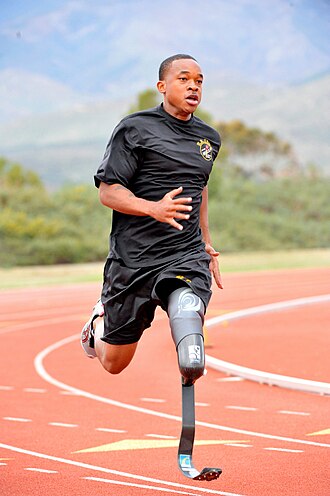
"The earliest known prosthesis, dating possibly as far back as 950 B.C., was discovered in Cairo on the mummified body of an ancient Egyptian noblewoman. The prosthesis is made largely of wood, molded and stained, its components bound together with leather thread. It is, as prostheses go, tiny. Because it is a toe. The prosthetic digit—the oldest little piggy in the world—is extraordinarily lifelike, its curved nail sunken into a similarly curved bed. Which is, in its way, remarkable. A toe! One that is several thousand years old! And its not just a toe-sized peg—a little device that would have made mobility more manageable for someone who was, by reasons of birth or amputation, missing her big toe. The prosthesis is, as much as it possibly could be, humanoid: maximally lifelike and maximally toe-like. The "Cairo Toe," as its been dubbed, is prosthetic and cosmetic at once—evidence not just of ancient manufacturing stepping in where biology was limited, but of manufacturing engaging in an ancient form of biomimcry. Compare the Cairo Toe to todays prostheses, many of which—especially those that dominate the public imagination—seem to be inspired less by "man," and more by the Bionic Man. The blades. The hooks. The exoskeletons. This week alone has brought news of a roboticized prosthetic hand that, possibly inspired by the workings of the claw crane, foregoes five fingers for three. It has brought news of a woman who created her own prosthetic leg ... out of LEGOs. Those stories come as part of a flood of coverage of the next generation of prostheses, in which technologies from adjacent fields—3D-printing, robotics, chemistry—are helping humans to transcend natures narrow definition of humanity."
Prosthesis
Prosthesis
Prosthesis
author

In medicine, a prosthesis, or a prosthetic implant, is an artificial device that replaces a missing body part, which may be lost through physical trauma, disease, or a condition present at birth. Prostheses may restore the normal functions of the missing body part, or may perform a cosmetic function.

More by Prosthesis

View all →
Quote
"Traditionally, a prosthetist would wrap a stump with plaster of Paris bandages to make a reverse mold and let it dry, then fill it with more plaster that must harden. From this a socket can be forged that fits, with more modifications for precision, to the bone on the stump. Great care must be taken to avoid nerves and tender areas that are not tolerant of pressure. The key for the technician is to understand the pathology of a stump, which differs for each person. This is a cumbersome process that can take a week, especially with gait training for new patients that lasts three days. It can also be messy work, mixing up and molding the plaster, while a prosthetist visiting a rural area must cart around 20-kilo packs of plaster. But with a 3-D scanner, a digital image can be made in half an hour and sent by email, and there is no mess."
ProsthesisProsthesis
Quote
"Stories of lives devastated by conflict or disease are all too common across low-income countries. Lack of an arm or leg can be tough anywhere, but for people in poorer parts of the planet, with so much less support and more rickety infrastructure, it is especially challenging. Some are victims of conflict, others were born with congenitall conditions. Many more are injured on roads, the casualty toll soaring in low-income nations even as it plummets in wealthier ones. Every minute, 20 people are seriously injured worldwide in road crashes. In Kenya, half the patients on surgical wards have road injuries. The World Health Organization (WHO) estimates there are about 30 million people like Nhial and Lam who require prosthetic limbs, braces, or other mobility devices. These can be simple to make and inexpensive. As one veteran prosthetist told me, his specialism is among the most instantly gratifying areas of medicine. “A patient comes in on Monday on crutches that leave them unable to carry anything. By Wednesday they are walking on a new leg and on Friday they leave with their life transformed.” Yet more than eight in 10 of those people needing mobility devices do not have them. They take a lot of work and expertise to produce and fit, and the WHO says there is a shortage of 40,000 trained prosthetists in poorer countries. There is also the time and cost to patients, who may have to travel long distances for treatment that can take five days—to assess need, produce a prosthesis and fit it to the residual limb. The result is that unglamorous items such as braces and artificial limbs are among the most-needed devices to assist lives. Yet, as in so many other areas, technology may be hurtling to the rescue, this time in the shape of 3-D printing."
ProsthesisProsthesis
Quote
"Yet for all the agonies and difficulties associated with arm loss, the bigger problem in low-income countries is when lower limb disability leads to loss of mobility. Wheelchairs are expensive and can be difficult to use when roads are pot-holed, streets are muddy and pavements are non-existent. Without a prosthetic limb, people struggle to fetch water, to prepare food and, above all, to work. This throws them back on their families and communities, intensifying any hardship and poverty."
ProsthesisProsthesis
Quote
"For a long time the history of prosthetics has been inextricably linked with the history of war, and thus of men. After World War II, when soldiers were returning from the battlefield, there was a collective anxiety about whether they’d be able to re-enter their families and workplaces. Many people wanted soldiers to come back, and for everything to go back to normal. But an amputation was a physical reminder that things were not the same. “Physicians, therapists, psychologists, and ordinary citizens alike often regarded veterans as men whose recent amputation was physical proof of emasculation or general incompetence, or else a kind of monstrous de-familiarization of the normal male body,” writes the professor David Serlin in the book Artificial Parts, Practical Lives. Serlin describes the ways in which the media and the military talked about these soldiers, pushing for them to be seen as “normal” in the eyes of the public. In 1946, the comic Gasoline Alley featured a man named Bix whose prosthetic lets him be a “normal American guy.” The comic shows Bix stocking shelves, and features a very surprised boss who exclaims, “I didn’t expect he’d be perfectly normal”—before hiring the man on the spot. Professional photographs taken at Walter Reed Army hospital depicted men with prosthetic devices doing “normal” male activities like lighting a cigarette and reading the sports page, their prosthetic legs adorned with “tattoos” of pinup girls."
ProsthesisProsthesis
Quote
"People have used all sorts of artificial devices probably from the beginnings of human history to help them compensate for the loss of a limb. Thus in very ancient times, the first and simplest prosthesis may have been a forked tree that was used as a crutch to help someone walk whose leg may have been badly damaged or lost in an accident or to a disease. What began as a modified crutch with a wooden or leather cup and progressed through many metamorphoses has now developed into a highly sophisticated prosthetic limb made of space-age materials."
ProsthesisProsthesis