Quote
"It is unlucky to sound off about happiness."
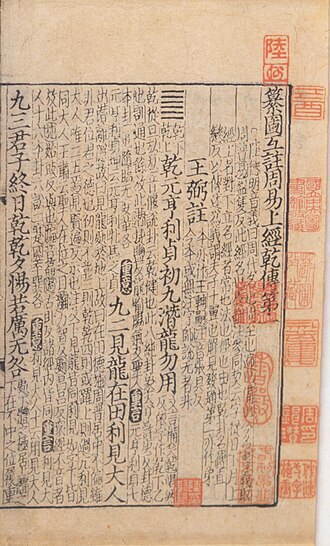 I Ching
"The I Ching does not offer itself with proofs and results; it does not vaunt itself, nor is it easy to approach. Like a part of nature, it waits until it is discovered. It offers neither facts nor power, but for lovers of self-knowledge, of wisdom—if there be such—it seems to be the right book. To one person its spirit appears as clear as day; to another, shadowy as twilight; to a third, dark as night. He who is not pleased by it does not have to use it, and he who is against it is not obliged to find it true. Let it go forth into the world for the benefit of those who can discern its meaning."
The I Ching or Yijing, usually translated Book of Changes or Classic of Changes, is an ancient Chinese divination text that is among the oldest of the Chinese classics. The I Ching was originally a divination manual in the Western Zhou period (1000–750 BC). Over the course of the Warring States and early imperial periods (500–200 BC), it transformed into a cosmological text with a series of philos
"It is unlucky to sound off about happiness."
I Ching"The superior man acquaints himself with many sayings of antiquity And many deeds of the past, In order to strengthen his character thereby."
I Ching"Change proves true on the day it is finished."
I Ching"To go ones way with sincerity brings clarity."
I Ching"When tempers flare up in the family, Too great severity brings remorse."
I Ching"Thus the superior man: If he sees good, he imitates it; If he has faults, he rids himself of them."
I Ching