Quote
"Unusually rapid growth cannot keep up forever; when a company has already registered a brilliant expansion, its very increase in size makes a repetition of its achievement more difficult."
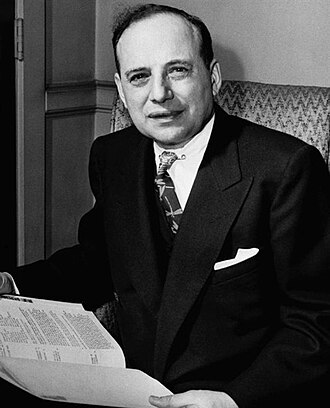 Benjamin Graham
"The investor would not be far wrong if this motto read more simply: "Never buy a stock immediately after a substantial rise or sell one immediately after a substantial drop"."
Benjamin Graham was an English-American financial analyst, economist, accountant, investor and professor. He is widely known as the "father of value investing", and wrote two of the discipline's founding texts: Security Analysis (1934) with David Dodd, and The Intelligent Investor (1949). His investment philosophy stressed independent thinking, emotional detachment, and careful security analysis,
"Unusually rapid growth cannot keep up forever; when a company has already registered a brilliant expansion, its very increase in size makes a repetition of its achievement more difficult."
Benjamin Graham"THERE is widespread agreement among economists that abuse of credit constitutes one of the chief unwholesome elements in business booms and is mainly responsible for the ensuing crash and depression."
Benjamin Graham"A price decline is of no real importance to the bona fide investor unless it is either very substantial—say, more than a third from cost—or unless it reflects a known deterioration of consequence in the companys position. In a well-defined bear market many sound common stocks sell temporarily at extraordinary low prices. It is possible that the investor may then have a paper loss of fully 50 per cent on some of his holdings, without any convincing indication that the underlying values have been permanently affected."
Benjamin Graham"In most cases the favorable price performance will be accompanied by a well-defined improvement in the average earnings, in the dividend, and in the balance-sheet position. Thus in the long run the market test and the ordinary business test of a successful equity commitment tend to be largely identical."
Benjamin Graham"Nothing in finance is more fatuous and harmful, in our opinion, than the firmly established attitude of common stock investors regarding questions of corporate management. That attitude is summed up in the phrase: "If you dont like the management, sell your stock." [...] The public owners seem to have abdicated all claim to control over the paid superintendents of their property"
Benjamin Graham"The history of the past fifty years, and longer, indicates that a diversified holding of representative common stocks will prove more profitable over a stretch of years than a bond portfolio, with one important provisio—that the shares must be purchased at reasonable market levels, that is, levels that are reasonable in the light of fairly well-defined standards derived from past experience."
Benjamin Graham