Quote
"Remembrance is neither what happened nor what did not happen but, rather, their potentialization, their becoming possible once again."
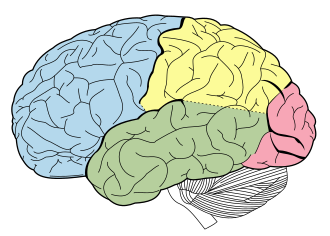 Memory
"The method of loci, an imaginal technique known to the ancient Greeks and Romans and described by Yates (1966) in her book The Art of Memory as well as by Luria (1969). In this technique the subject memorizes the layout of some building, or the arrangement of shops on a street, or any geographical entity which is composed of a number of discrete loci. When desiring to remember a set of items the subject walks through these loci in their imagination and commits an item to each one by forming an image between the item and any feature of that locus. Retrieval of items is achieved by walking through the loci, allowing the latter to activate the desired items. The efficacy of this technique has been well established (Ross and Lawrence 1968, Crovitz 1969, 1971, Briggs, Hawkins and Crovitz 1970, Lea 1975), as is the minimal interference seen with its use."
Memory is the faculty of the mind by which data or information is encoded, stored, and retrieved when needed. It is the retention of information over time for the purpose of influencing future action. If past events could not be remembered, it would be impossible for language, relationships, or personal identity to develop. Memory loss is usually described as forgetfulness or amnesia.
"Remembrance is neither what happened nor what did not happen but, rather, their potentialization, their becoming possible once again."
Memory"Though sands be black and bitter black the sea, Night lie before me and behind me night, And God within far Heaven refuse to light The consolation of the dawn for me,— Between the shadowy burns of Heaven and Hell, It is enough love leaves my soul to dwell  With memory."
Memory"Anyone who’s taken statements from multiple witnesses to the same event will know how malleable memory is."
Memory"The affective intensity of an event is another predictor of later recall: Events that are "affectively charged," or have high levels of emotionality associated with them, either positive or negative, tend to be well recalled (e.g., Brewer, 1988; Thompson, 1998; Wagenaar, 1986; White, 2002)."
Memory"Nothing is more memorable than a smell. One scent can be unexpected, momentary and fleeting, yet conjure up a childhood summer beside a lake in the mountains; another, a moonlit beach; a third, a family dinner of pot roast and sweet potatoes during a myrtle-mad August in a Midwestern town. Smells detonate softly in our memory like poignant land mines hidden under the weedy mass of years. Hit a tripwire of smell and memories explode all at once. A complex vision leaps out of the undergrowth."
Memory"Look at it out here! Its all falling apart. Im erasing you, and Im happy! You did it to me first. I cant believe you did this to me. Clem! Did you hear me? By morning, youll be gone! The perfect ending to this piece of sh*t story!"
Memory