Quote
"According to the basic evolutionary criteria of survival and reproduction, wheat has become one of the most successful plants in the history of the earth."
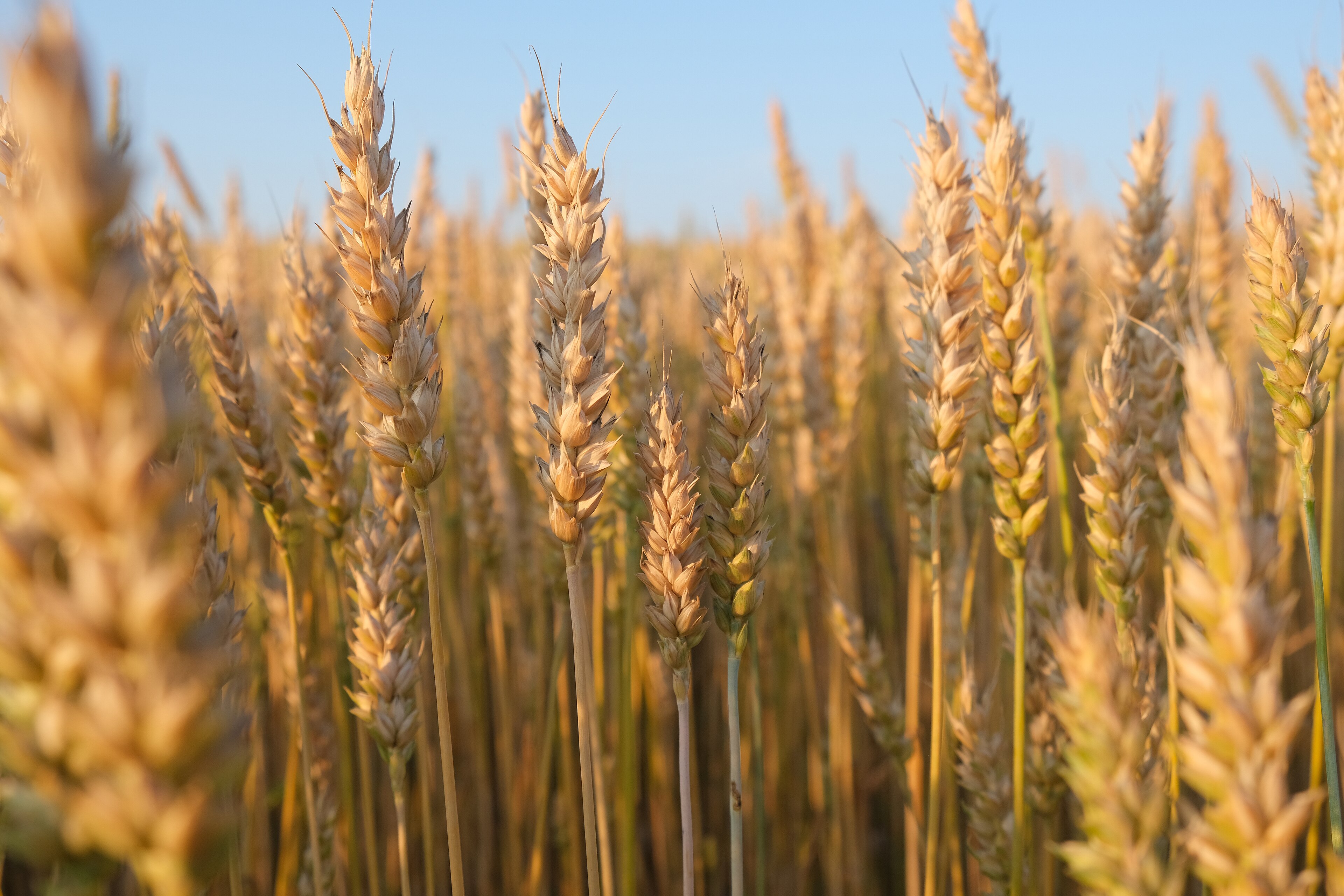 Wheat
Wheat"the new agricultural task demanded so much so much time that people were forced to settle permanently next to their wheat field. This completely changed their way of life. We did not domesticate wheat. It domesticated us."
Wheat is a group of wild and domesticated grasses of the genus Triticum. As cereals, they are cultivated for their grains, which are staple foods around the world. Well-known wheat species and hybrids include the most widely grown common wheat, spelt, durum, emmer, einkorn, and Khorasan or Kamut. The archaeological record suggests that wheat was first cultivated in the regions of the Fertile Cresc
"According to the basic evolutionary criteria of survival and reproduction, wheat has become one of the most successful plants in the history of the earth."
Wheat"11 Be ye ashamed, O ye husbandmen; howl, O ye vinedressers, for the wheat and for the barley; because the harvest of the is perished."
Wheat"TILLERING The wheat plant has the ability to , i.e. to produce lateral branches. At the end of the vegetative phase of development, the plant will consist of, in addition to the main shoot, a number of tillers. Exactly how many are present at this stage varies widely depending on factors such as plant population, sowing date, mineral nutrition and the application of plant growth regulators. Of the tillers present at this time, only a proportion will survive, the rest dying without producing an , possibly due to competition for resources, such as light or nutrients."
Wheat"Wheat is the dominant crop in temperate countries being used for human food and livestock feed. Its success depends partly on its adaptability and high yield potential but also on the protein fraction which confers the viscoelastic properties that allow dough to be processed into bread, , s, and other food products. Wheat also contributes s, s, and s, and beneficial s and components to the human diet, and these are particularly enriched in whole-grain products. However, wheat products are also known or suggested to be responsible for a number of adverse reactions in humans, including intolerances (notably ) and allergies (respiratory and food). Current and future concerns include sustaining wheat production and quality with reduced inputs of agrochemicals and developing lines with enhanced quality for specific end-uses, notably for s and human nutrition."
Wheat"36 Thou fool, that which thou sowest is not quickened, except it die: 37 And that which thou sowest, thou sowest not that body that shall be, but bare grain, it may chance of wheat, or of some other grain: 38 But God giveth it a body as it hath pleased him, and to every seed his own body."
Wheat"Bread may be made out of wheat flour, water, , and salt. Even when it contains no other ingredients than these, it has not always the same food value, pound for pound, for flours themselves differ in composition, and, moreover, some flours take up more water than others, the result being moister bread. Sometimes a little sugar or fat is added to the ingredients, and milk is often substituted for part of the water. These substances contribute somewhat to the nutritive valued of the bread, but they are used in such small amounts that they are much less important than the flour. The food value of a pound of bread is, therefore, not far different from that of the flour used in making it."
Wheat