Quote
"Genes embody knowledge about their niches. Everything of fundamental significance about the phenomenon of life depends on this property, and not on replication per se."
 Genetics
"The onion test is a simple reality check for anyone who thinks they can assign a function to every nucleotide in the human genome. Whatever your proposed functions are, ask yourself this question: Why does an onion need a genome that is about five times larger than ours?"
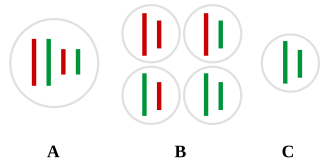
Genetics is the study of genes, genetic variation, and heredity in organisms. It is an important branch in biology because heredity is vital to organisms' evolution. Gregor Mendel, a Moravian Augustinian friar working in the 19th century in Brno, was the first to study genetics scientifically. Mendel studied "trait inheritance", patterns in the way traits are handed down from parents to offspring
"Genes embody knowledge about their niches. Everything of fundamental significance about the phenomenon of life depends on this property, and not on replication per se."
Genetics"Humanity should study the foundations of heredity. But this will be possible only when science is liberated from superstition and limitation. Many accumulations have piled up on man. Heredity of one’s personal incarnations, heredity of the clan, heredity of one’s people, supermundane heredity, and also the many influences of accidental encounters, which imprint themselves on the psychic nature and change it. Indeed, scientists of limited mind can observe heredity only within the context of the family; in other words, within the most narrow limitations. They occasionally do observe those inherited traits that may appear even after several generations. But they cannot make the more sensitive observations, because they do not believe in reincarnation or in the Supermundane World. It is impossible to properly observe man within these narrow, ignorant limitations, but one may hope that science will free itself and will achieve true insights... The Thinker reminded, “Liberate science, hasten to remove its fetters.” (929)"
Genetics"The attitudes vary between countries, there are numerous texts for various types of biobanks, the same texts raise different interpretations in different institutions, there are new ethical opinions expressed, and mainly the novelty of questions raised by the uses of samples that are possible today, especially in genetics, and were not foreseeable at the time of sampling make the field difficult in practice."
Genetics"Modern science is proving more and more clearly that heredity plays an ever-decreasing part in the evolution of the higher creatures, that mental and moral qualities are not transmitted from parents to offspring, and that the higher qualities the more patent is this fact ‘ the child of the genius is oft-times a dolt; commonplace parents give birth to a genius."
Genetics"Most Americans still believe that there is some biological legitimacy to our socially constructed racial categories. However, our modern scientific understanding of human genetic diversity flies in the face of all of our social stereotypes."
Genetics"One prong in the approach to incorporating genetics into clinical work focuses on the parents of individuals with eating disorders. Whether the parents are involved in parent training, traditional family therapy, or other types of supportive interventions, they can be educated about genetic factors influencing eating disorders. A sensitive explanation that incorporates knowledge about complex genetic etiology (not the one gene-one disease model) and about how genes and environment interact can serve to relieve guilt in parents who have been blamed for creating the illness in their offspring (or alternatively erroneously assumed that their parenting was to blame). A genetic and biological explanation can help parents understand that their child’s resistance is not just stubbornness or deviousness, but that in his or her recovery, their child is fighting an uphill battle against his or her biology. This knowledge can empower parents to understand and can decrease frustration. Care should be taken that parents do not transform this knowledge into a new form of guilt (i.e., feeling guilty for passing on risk genes), as the roll of the genetic dice is one thing over which we have no control. Likewise, care should be taken not to allow the genetic information to impart complete absolution on parents, as parenting can always improve and positive parenting changes should also be prescribed as part of treatment."
Genetics