Quote
"For a man of science to refuse an opportunity to investigate any new phenomenon, whether it comes to him in the shape of a man from the moon, or a ghost from the Eddy homestead, is alike reprehensible. (5)"
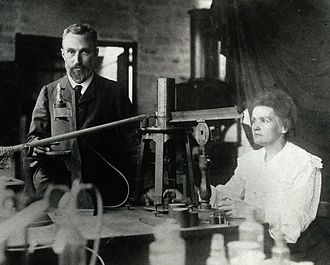 Scientists
"The scientist does not study nature because it is useful to do so. He studies it because he takes pleasure in it, and he takes pleasure in it because it is beautiful. If nature were not beautiful it would not be worth knowing, and life would not be worth living. I am not speaking, of course, of the beauty which strikes the senses, of the beauty of qualities and appearances. I am far from despising this, but it has nothing to do with science. What I mean is that more intimate beauty which comes from the harmonious order of its parts, and which a pure intelligence can grasp."
"For a man of science to refuse an opportunity to investigate any new phenomenon, whether it comes to him in the shape of a man from the moon, or a ghost from the Eddy homestead, is alike reprehensible. (5)"
Scientists"There must be no barriers for freedom of inquiry. There is no place for dogma in science. The scientist is free, and must be free to ask any question, to doubt any assertion, to seek for any evidence, to correct any errors."
Scientists"Scientists today … have to be able to interpret their findings just as skillfully as they conduct their research. If not, a lot of priceless new knowledge will have to wait for a better man."
Scientists"A scientist is happy, not in resting on his attainments but in the steady acquisition of fresh knowledge."
Scientists"Most of our political leaders are not engineers or scientists and do not listen to engineers or scientists. Today a letter from Einstein would get lost in the White House mail room, and the Manhattan Project would not even get started; it certainly could never be completed in three years. I am not aware of a single political leader in the U.S., either Democrat or Republican, who would cut health-care spending in order to free up money for biotechnology research — or, more generally, who would make serious cuts to the welfare state in order to free up serious money for major engineering projects."
Scientists"By a recent estimate, nearly half the bills before the U.S. Congress have a substantial science-technology component and some two-thirds of the District of Columbia Circuit Court’s case load now involves review of action by federal administrative agencies; and more and more of such cases relate to matters on the frontiers of technology. If the layman cannot participate in decision making, he will have to turn himself over, essentially blind, to a hermetic elite. … [The fundamental question becomes] are we still capable of self-government and therefore freedom? Margaret Mead wrote in a 1959 issue of Daedalus about scientists elevated to the status of priests. Now there is a name for this elevation, when you are in the hands of—one hopes—a benevolent elite, when you have no control over your political decisions. From the point of view of John Locke, the name for this is slavery."
Scientists