SHAWORDS

There are many different though often complementary ways of looking at — Anarchism

HomeAnarchismQuote
"There are many different though often complementary ways of looking at anarchism, but in a nutshell, it can be defined as the striving toward a "free society of free individuals."
A
Anarchism
Anarchism
author205 quotes

Anarchism is a political philosophy and movement that seeks to abolish all institutions that perpetuate authority, coercion, or hierarchy, primarily targeting the state and capitalism. Anarchism advocates for the replacement of the state with stateless societies and voluntary free associations. Anarchism is described as being part of the libertarian wing of the socialist movement.

More by Anarchism

View all →
Quote
"How ill we go on like human beings eating and sleeping, working and loving, exchanging and dealing, without government? So used have we become to "organized authority" in every department of life that ordinarily we cannot conceive of the most common-place avocations being carried on without their interference and "protection." But anarchism is not compelled to outline a complete organization of a free society. To do so with any assumption of authority would be to place another barrier in the way of coming generations. The best thought of today may become the useless vagary of tomorrow, and to crystallize it into a creed is to make it unwieldy."
A
Anarchism

Quote
"The anarchists put the thing upside down. They declare that the proletarian revolution must begin by doing away with the political organization of the state. But to destroy it at such a moment would be to destroy the only organism by means of which the victorious proletariat can assert its newly-conquered power, hold down its capitalist adversaries, and carry out that economic revolution of society without which the whole victory must end in a new defeat and a mass slaughter of the workers similar to those after the Paris commune."
A
Anarchism

More on Dua

View all →
Quote
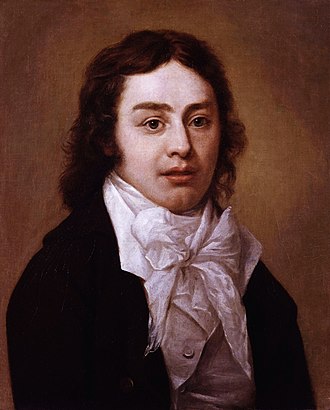
"As in respect of the first wonder we are all on the same level, how comes it that the philosophic mind should, in all ages, be the privilege of a few? The most obvious reason is this: The wonder takes place before the period of reflection, and (with the great mass of mankind) long before the individual is capable of directing his attention freely and consciously to the feeling, or even to its exciting causes. Surprise (the form and dress which the wonder of ignorance usually puts on) is worn away, if not precluded, by custom and familiarity."
Samuel Taylor ColeridgeSamuel Taylor Coleridge