Quote
"I can’t quit, once I’ve started. I’ve been told I’m pathologically persistent. I can’t quit."
L
Lois McMaster Bujold"There are two possible ways to solving a dilemma, in justice or elsewhere; begin with the facts, and follow out their logic where it leads one, or begin with the desired outcome, and reason backward to the necessary steps to achieve it."
Lois McMaster Bujold is an American speculative fiction writer. She has won the Hugo Award for best novel four times, matching Robert A. Heinlein's record. Bujold is best known for her Vorkosigan Saga, a series of science fiction novels featuring Miles Vorkosigan, a physically impaired interstellar spy and mercenary admiral from the planet Barrayar, set approximately 1000 years in the future. The
"I can’t quit, once I’ve started. I’ve been told I’m pathologically persistent. I can’t quit."
"“Is that going to be a problem?” said Ivan. “Definitely. I just don’t know what kind, yet. Or whose.”"
"Vorkalloner seemed suddenly less amusing. “Why are you all so anxious to put us in a bottle, anyway?” “Why, orders,” said Vorkalloner simply, like an ancient fundamentalist who answers every question with the tautology, “Because God made it that way.” Then a little agnostic doubt began to creep over his face. “Actually, I thought we might have been sent out here on guard duty as some kind of punishment,” he joked. The remark caught Vorkosigan’s humor. “For your sins? Your cosmology is too egocentric, Aristede”"
"“Suffering bastard.” “I thought you saw meaning in that sort of thing,” said Vorkosigan. “In the abstract. Most days it’s just stumbling around in the dark with the rest of creation, smashing into things and wondering why it hurts.”"
"I am a shy person when allowed. I regard a lot of the PR — s, speeches, appearances, media interviews — with much the same dismay as a non-swimming parent would contemplate the prospect of jumping into a raging torrent to rescue their child. One doesnt really see how any good can come of it, but one cant not jump. ("My baby book, help, it is drowning!") I need to get in touch with my surly side more, I suppose, to learn to say "no" to nice people who like me."
"Hunting hawks do not belong in cages, no matter how much a man covets their grace, no matter how golden the bars. They are far more beautiful soaring free. Heartbreakingly beautiful."
"O dread and silent mount! I gazed upon thee, Till thou, still present to the bodily sense, Didst vanish from my thought: entranced in prayer, I worshipped the Invisible alone."
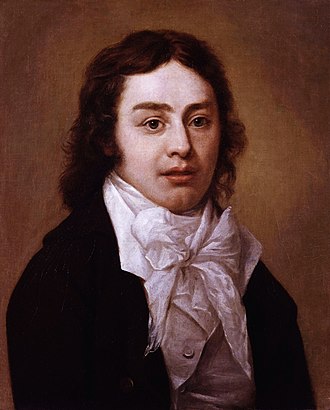 Samuel Taylor Coleridge
"Mister Toombs was willing to dissolve the Union to save slavery, Mister Phillips, to save liberty; while Mister Seward, denounced and derided by both, declared that the deepest instinct of the American people was for union. Reserved rights. State rights, limited powers, the advantages of union and disunion, were the cucumbers from which we were busily engaged in distilling light, overlooking the fact of nationality in discussing the conditions of union. We were speculating upon costume. We gravely proved that the clothes were the clothes of a woman, or of a child, without seeing that whatever the clothes might be there was a full-grown man inside of them. "The Constitution is a contract between sovereign States", shouted Mister Toombs, "let Georgia tear it and separate". "The Constitution is a league with hell", calmly replied Mister Phillips, "let New York cut off New Orleans to rot alone". "Oh, dear! it"s a dreadful dilemma", whimpered President Buchanan. "States have no right to secede, and the United States have no right to coerce. Oh, dear me! it"s perfectly awful! I"m the most patriotic of men, but what shall I do? what shall I do?" Separate! Cut off! Secede! It was of a living body they spoke, which, pierced anywhere, quivered everywhere."
 Wendell Phillips
"Its never a matter of ethics versus pragmatism; its a question of which informs the other. Humans have shown themselves capable of almost unlimited imagination and innovation—qualities that could be said to define human beings. People have used this capacity to do both great good and great harm. The point is that when humans set their minds to doing something, its frequently possible. It makes sense to first ask what people want to do and why, from an ethical standpoint, and then get to the pragmatic how-to questions. The very process of asking whats right is how people fill out ethics in praxis, to meet new demands and dilemmas, new social conditions and contexts. Anarchism, then, brings an egalitarian ethics out into the world, making it transparent, public, and shared. It maintains an ethical orientation, while continually trying to put such notions into practice, as flawed as the effort might be. When other people come into contact with this ethical compass, they will hopefully "get it" and incorporate the same values into their lives, because it works. It offers directionality to political involvement and buttresses peoples efforts to remake society. It turns surviving into thriving. Thats the crucial difference between a pragmatic versus ethical impulse: people, in cooperative concert, qualitatively transform one anothers lives."
"Thats... the big discovery of this principle of computational equivalence of mine. ...This is something which is kind of a follow-on to Gödels theorem, to Turings work on the ... that there is this fundamental limitation built into science, this idea of computational irreducibility that says that even though you may know the rules by which something operates, that does not mean that you can readily... be smarter that it and jump ahead and figure out what its going to do."
"The art of leading, in operations large or small, is the art of dealing with humanity, of working diligently on behalf of men, of being sympathetic with them, but equally, of insisting that they make a square facing toward their own problems."
 Leadership
"The establishment of "The Times" newspaper is an example, on a large scale, of a manufactory in which the division of labour, both mental and bodily, is admirably illustrated, and in which also the effect of domestic economy is well exemplified. It is scarcely imagined, by the thousands who read that paper in various quarters of the globe, what a scene of organized activity the factory presents during the whole night, or what a quantity of talent and mechanical skill is put in action for their amusement and information."
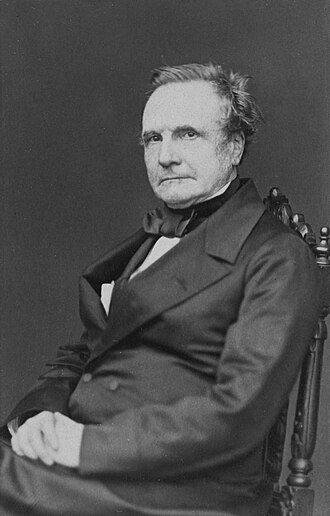 Charles Babbage