SHAWORDS

There is something however in the experiments of points, sending off, — Benjamin Franklin

"There is something however in the experiments of points, sending off, or drawing on, the electrical fire, which has not been fully explained, and which I intend to supply... For the doctrine of points is very curious, and the effects of them truly wonderfull; and, from what I have observed on experiments, I am of opinion, that houses, ships, and even towns and churches may be effectually secured from the stroke of lightening by their means; for if, instead of the round balls of wood or metal, which are commonly placed on the tops of the weathercocks, vanes or spindles of churches, spires or masts, there should be put a rod of iron 8 or 10 feet in length, sharpend gradually to a point like a needle, and gilt to prevent rusting, or divided into a number of points, which would be better—the electrical fire would, I think, be drawn out of a cloud silently, before it could come near enough to strike..."
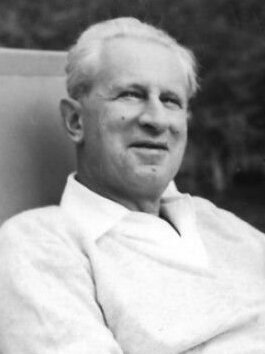
Benjamin Franklin
Benjamin Franklin
Benjamin Franklin
author92 quotes

Benjamin Franklin was an American polymath: a writer, scientist, inventor, statesman, diplomat, printer, publisher and political philosopher. Among the most influential intellectuals of his time, Franklin was one of the Founding Fathers of the United States; a drafter and signer of the Declaration of Independence; and the first postmaster general.

More by Benjamin Franklin

View all →
Quote
"Ive lived, Sir, a long time, and the longer I live, the more convincing Proofs I see of this Truth — That God governs in the Affairs of Men. And if a sparrow cannot fall to the ground without his Notice, is it probable that an Empire can rise without his Aid? We have been assured, Sir, in the Sacred Writings, that except the Lord build the House they labor in vain who build it. I firmly believe this, — and I also believe that without his concurring Aid, we shall succeed in this political Building no better than the Builders of Babel: We shall be divided by our little partial local interests; our Projects will be confounded, and we ourselves shall become a Reproach and Bye word down to future Ages."
Benjamin FranklinBenjamin Franklin
Quote
"why should the Palatine Boors be suffered to swarm into our Settlements, and by herding together establish their Language and Manners to the Exclusion of ours? Why should Pennsylvania, founded by the English, become a Colony of Aliens, who will shortly be so numerous as to Germanize us instead of our Anglifying them, and will never adopt our Language or Customs, any more than they can acquire our Complexion. 24. Which leads me to add one Remark: That the Number of purely white People in the World is proportionably very small. All Africa is black or tawny. Asia chiefly tawny. America (exclusive of the new Comers) wholly so. And in Europe, the Spaniards, Italians, French, Russians and Swedes, are generally of what we call a swarthy Complexion; as are the Germans also, the Saxons only excepted, who with the English, make the principal Body of White People on the Face of the Earth. I could wish their Numbers were increased. And while we are, as I may call it, Scouring our Planet, by clearing America of Woods, and so making this Side of our Globe reflect a brighter Light to the Eyes of Inhabitants in Mars or Venus, why should we in the Sight of Superior Beings, darken its People? why increase the Sons of Africa, by Planting them in America, where we have so fair an Opportunity, by excluding all Blacks and Tawneys, of increasing the lovely White and Red? But perhaps I am partial to the Complexion of my Country, for such Kind of Partiality is natural to Mankind."
Benjamin FranklinBenjamin Franklin

More on Dua

View all →
Quote
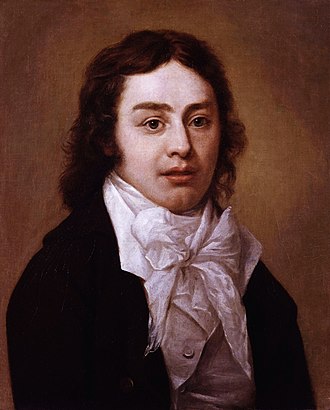
"As in respect of the first wonder we are all on the same level, how comes it that the philosophic mind should, in all ages, be the privilege of a few? The most obvious reason is this: The wonder takes place before the period of reflection, and (with the great mass of mankind) long before the individual is capable of directing his attention freely and consciously to the feeling, or even to its exciting causes. Surprise (the form and dress which the wonder of ignorance usually puts on) is worn away, if not precluded, by custom and familiarity."
Samuel Taylor ColeridgeSamuel Taylor Coleridge