SHAWORDS

This fundamental and most important article being established upon suc — James Bradley

"This fundamental and most important article being established upon such full evidence, it remained to be examined within what limits the errors arising from observations actually taken at sea could be contained. In order to determine this point, I computed the ships longitude from each of the observations made by captain Campbell, and, upon comparing the results of several that were taken near the same time and under the like circumstances, it appeared that in general the observer was not liable to err more than one minute in judging of the apparent contact of the moons limb and the object with which it was compared. Now this being nearly the same error that would be found to obtain, if the like observations were to be made with the same instruments on land, it may hence be inferred, that in moderate weather the motion of the ship is no otherwise an impediment in this sort of observations, than as it renders the repetition of them more tedious and troublesome to the observer, which yet ought by no means to be omitted; because if each single observation be liable to an error of a minute only, by taking the mean of five or six, the error on this head may be so far diminished as to be of small moment."
James Bradley
James Bradley
James Bradley
author1725–172856 quotes

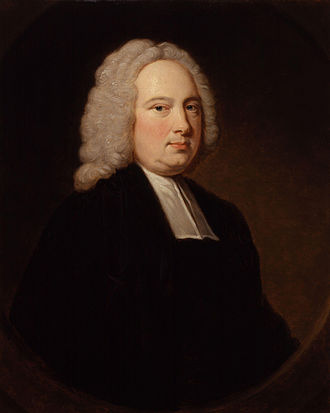
James Bradley was an English astronomer and priest who served as the third Astronomer Royal from 1742. He is best known for two fundamental discoveries in astronomy, the aberration of light (1725–1728), and the nutation of the Earth's axis (1728–1748).

More by James Bradley

View all →
Quote
"When the year was completed, I began to examine and compare my observations, and having pretty well satisfied myself as to the general laws of the phenomena, I then endeavored to find out the cause of them. I was already convinced that the apparent motion of the stars was not owing to the of the earths axis. The next thing that offered itself was an alteration in the direction of the plumb-line with which the instrument was constantly rectified; but this upon trial proved insufficient. Then I considered what refraction might do, but here also nothing satisfactory occurred. At length I conjectured that all the phenomena hitherto mentioned, proceeded from the progressive motion of light and the earths annual motion in its orbit. For I perceived that, if light was propagated in time, the apparent place of a fixed object would not be the same when the eye is at rest, as when it is moving in any other direction than that of the line passing through the eye and the object; and that, when the eye is moving in different directions, the apparent place of the object would be different."
James BradleyJames Bradley
Quote
"My Instrument being fixed, I immediately began to observe such Stars as I judged most proper to give me light into the Cause of the Motion... There was Variety enough of small ones; and not less than twelve, that I could observe through all the Seasons of the Year; they being bright enough to be seen in the Day-time, when nearest the Sun. I had not been long observing, before I perceived, that the Notion we had before entertained of the Stars being farthest North and South, when the Sun was about the Equinoxes, was only true of those that were near the solstitial Colure: And after I had continued my Observations a few Months, I discovered what I then apprehended to be a general Law, observed by all the Stars, viz. That each of them became stationary, or was farthest North or South, when they passed over my Zenith at six of the Clock, either in the Morning or Evening. I perceived likewise, that whatever Situation the Stars were in with respect to the cardinal Points of the Ecliptick, the apparent Motion of every one tended the same Way, when they passed my Instrument about the same Hour of the Day or Night; for they all moved Southward, while they passed in the Day, and Northward in the Night; so that each was farthest North, when it came about Six of the Clock in the Evening, and farthest South when it came about Six in the Morning."
James BradleyJames Bradley
Quote
"Hitherto we have considered the apparent motion of the star about its true place, as made only in a plane parallel to the ecliptic, in which case it appears to describe a circle in that plane; but since, when we judge of the place and motion of a star, we conceive it to be in the surface of a sphere, whose centre is our eye, twill be necessary to reduce the motion in that plane to what it would really appear on the surface of such a sphere, or (which will be equivalent) to what it would appear on a plane touching such a sphere in the stars true place. Now in the present case, where we conceive the eye at an indefinite distance, this will be done by letting fall perpendiculars from each point of the circle on such a plane, which from the nature of the orthographic projection will form an ellipsis, whose greater axis will be equal to the diameter of that circle, and the lesser axis to the greater as the sine of the stars latitude to the radius, for this latter plane being perpendicular to a line drawn from the centre of the sphere through the stars true place, which line is inclined to the ecliptic in an angle equal to the stars latitude; the touching plane will be inclined to the plane of the ecliptic in an angle equal to the complement of the latitude. But it is a known proposition in the orthographic projection of the sphere, that any circle inclined to the plane of the projection, to which lines drawn from the eye, supposed at an infinite distance, are at right angles, is projected into an ellipsis, having its longer axis equal to its diameter, and its shorter to twice the cosine of the inclination to the plane of the projection, half the longer axis or diameter being the radius. Such an ellipse will be formed in our present case..."
James BradleyJames Bradley
Quote
"I would by no means attempt to infer from hence, that the longitude found by observations of this sort may in all cases be depended upon within one degree; but I beg leave to observe, that whatever extraordinary circumstances may have concurred to produce so near an agreement in this particular case, the event is such as may give reason to hope, however great the difficulties of finding the longitude by this method seem to be, that they are not insuperable, or such as ought to deter those whom it most nearly concerns from attempting to remove them."
James BradleyJames Bradley