SHAWORDS

This isnt the teams first silken discovery either. In a 2017 study, th — Spiders

HomeSpidersQuote
"This isnt the teams first silken discovery either. In a 2017 study, they looked closely at how the little arachnids spin their silk, finding that they create tiny loops which add toughess to the fibers. Each strand has up to 500 loops per inch. Miceli reports that previous studies had proposed that nanostrands were involved in the makeup of the silk, but no one had considered that the entire strand would be composed of them. Armed with the new research and information about the loops, the researchers have now created a new model for the spider silk’s structure. The nanotendrils arent braided together like in a rope cable, but are instead stuck together with relativley weak bonds. When they act as a whole, however, the strands give the silk its incredible strength."
Spiders
Spiders
Spiders
author14 quotes

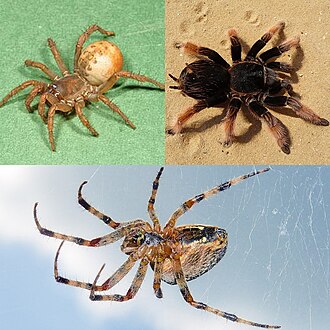
Spiders are air-breathing arthropods that have eight limbs, chelicerae with fangs generally able to inject venom, and spinnerets that extrude silk. They are the largest order of arachnids and rank seventh in total species diversity among all orders of organisms. Spiders are found worldwide on every continent except Antarctica, and have become established in nearly every land habitat. As of January

More by Spiders

View all →
Quote
"Spider silk is often touted as some of the strongest material on Earth: According to some calculations, it can be up to five times stronger than steel cable of similar weight—though that comparison is not perfect. If humans could manufacture spider silk on an industrial scale, which they’ve been trying to do for decades, it could lead to an era of lightweight bulletproof vests, helmets, superstrong threads and patches that could be used during surgery and even lightweight airplane fuselages."
SpidersSpiders
Quote
"Spiders were around long before humans, and it is likely they will be around in some number far into the future, even if humans are not. When most land and sea animals died out during the Permian mass extinction, spiders survived. Spiders thrived when oxygen levels were both lower and higher than today, when the sunlight hitting the ground was both stronger and weaker, and when plant and animal populations were both greater and smaller. Silk and the evolvable nature of the genes that dictate it have enabled spiders to stake a claim on the land for hundreds of millions of years and they are likely to do so for hundreds of millions of years to come."
SpidersSpiders