SHAWORDS

This last fact highlights an even more astonishing result of the exhib — Unit 731

HomeUnit 731Quote
"This last fact highlights an even more astonishing result of the exhibition. Surviving members of Unit 731 who had sworn to remain silent about their memories came out before the public to testify-to confess-and finally unburden their minds. After a half century of silence, they told. Some could tell all but their names, and retained that one secret before the public: an omission meaningful to them, but a minor exclusion for those of us more interested in their stories than in their identities. Others identified themselves openly. Some reached the point of weeping with equal openness, as they looked back through decades of silence to stir up ugly recollections. But those who are coming forward now, after some half-century of silence, are among the most forceful in pressing for the story to be told. Additionally, a limited number of members of the post-war generation- scientists, doctors, writers-are searching out the survivors, doing their own research, and informing the public through writings and lectures. Outrage and shame span the generations. Exhibition sites generally have a desk where visitors may write their impressions and comments. Attendees from elementary school on up have recorded the shock of the history lesson."
Unit 731
Unit 731
Unit 731
author11 quotes

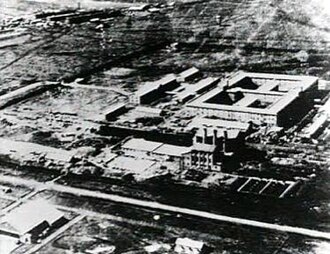
Unit 731 , officially known as the Manchu Detachment 731 and also referred to as the Kamo Detachment and the Ishii Unit, was a secret research facility operated by the Imperial Japanese Army between 1933 and 1945. It was located in the Pingfang district of Harbin, in the Japanese puppet state of Manchukuo, and maintained multiple branches across mainland China and Southeast Asia.

More by Unit 731

View all →
Quote
"As of today, Unit 731 is arguably one of the most thoroughly researched and best documented among many known episodes of Japanese war crimes. It may be also said that the highly organized and institutionalized nature of Unit 731’s criminality likely made it comparatively easy for researchers to develop a comprehensive picture of Unit 731’s wartime activities once relevant oral and documentary histories became available. To achieve the same level of comprehensiveness would be challenging with other episodes of large-scale Japanese war crimes, such as the Nanjing Massacre, whose occurrence could not be attributed to the establishment and operation of a single Unit 731-like criminal organization. In a word, the crimes committed by the members of Unit 731 were a case of “criminality of closed systems” in the sense that the unit members made systematic use of humans for medical experimentation in fulfillment of their specific organizational mission, just like the members of concentration camps in German-controlled Europe gassed to death the Jewish people in fulfillment of the camps’ organizational mission."
Unit 731Unit 731
Quote
"The Japanese people began acquiring knowledge about Unit 731 as early as the 1950s, thanks in part to confessional accounts that some of the former Japanese soldiers returning from China published, and also to book-length studies of Unit 731 became a household word with the publication in 1981 of Akuma no hoshoku (“The Devil’s Gluttony”), written by popular author Moriumura Seiichi. This book offered in a gripping narrative the details of diabolical activities of Unit 731, and set in motion a nation-wide dialogue about Unit 731 and its legacy in postwar Japan. Meanwhile, Unit 731 as a subject of scholarly inquiry gained traction, and researchers in Japan as well as elsewhere came to produce a number of original studies that made extensive use of archival materials in China, Japan, the Soviet Union and the United States."
Unit 731Unit 731
Quote
"Information on Japan’s consumption of live human beings as biological test material has been surfacing for many years now. As with the comfort women issue, however, there has never been a jolt of sufficient voltage to rock the national government into acts of contrition or compensation. Rather, it has been local governments who have opened their eyes to history. The efforts of local governments in conjunction with high degrees of volunteer activity in their areas, can be credited with bringing the Unit 731 Exhibition before the eyes of Japanese in sixty-one locations over the course of a year and a half. The exhibition, in whose final days this book was begun, was arranged by a central organizing committee in Tokyo, and each locality which wanted to plan a local exhibition had to raise its own funds and find its own venue. There was, of course, an admission fee to enter the exhibit, and so for the visitors it could be considered a self-financed course in the history omitted by orthodox education. The shock to the Japanese people was predictable. In spite of the occasional documentary coverage or newspaper article, Unit 731 was largely unknown and unthought of. It sat safely outside the scope of the consciousness of most Japanese. True, some attention was drawn to Unit 731 when the Japanese government was taken to court for not permitting factual accounts of it in school textbooks, but even those with some knowledge of the Ishii organization had their eyes opened at the exhibits."
Unit 731Unit 731
Quote
"There are several reasons why the code of silence has evaporated at this late hour. Whatever these motivations might be, however we can be grateful that the grave did not get all the truth. One focus of this book will be the actual words of those who helped conduct Japan’s biological warfare human experimentation program. The exhibition itself, the reactions it provoked, and the testimonies of former unit members who came forth and spoke out were all driving factors behind the creation of this book. It is as important for these events to be available to English-readers as it is that Japanese know them. Some of the testimonies and statements presented ere were originally given at lecture programs which the author attended, recorded, and translated. At other programs in different parts of the country, testimonies were obtained with the cooperation of the local organizing committees. An independent team sought out former Unit 731 members and produced a video series which was another source. A few of the testimonies were told to other people who then reported on them at lectures or in print. The recent declassification under the Freedom of Information Act of some documents that had been sealed for years also played an important role in the creation of this book. Events in the former Soviet Union likewise brought about a freeing of material formerly kept hidden away. Some Japanese documents have also been declassified making them available to researchers. In the end, however, the most thought-provoking source of public information on Japan’s human experiments comes from those who were there, then emerged from silence and provided the personal accounts which lead us back to the crimes with distressing credibility. These firsthand recollections make mockery of statements which attempt to smooth down the edges of the cruelty and racism that made Unit 731 possible."
Unit 731Unit 731
Quote
"This book outlines medical experimentation that was conducted by Unit 731, heinous acts including injecting human subjects with pathogens; monitoring the progress of diseases by drawing blood samples from and conducting vivisection on live individuals; exposing human subjects to infected insects in an open-air testing field; infecting a health individual with venereal disease by way of forced sexual intercourse with a carrier of venereal disease; causing frostbite on limbs by exposing them to water and cold air in a sub-zero temperature environment; and collecting human specimens-organs, body parts and even entire bodies of human subjects-which were subsequently kept at Unit 731’s lab and the army medical facilities in Tokyo. None of the subjects in Unit 731’s custody survived the war, as they either died during experiments or were killed en masse as part of the Japanese cover-up effort at the war’s end. Some of the biological weapons thus developed, meanwhile, were put to use during the Japanese military campaigns against China. The Imperial Japanese Army also set up other medical units in Beijing, Nanjing, Guangzhou, and Singapore, so that biological weapons research and development could be carried forth in the broader region of Asia and the Pacific under Japanese military control."
Unit 731Unit 731
Quote
"Some four decades following the end of World War II, details concerning the Imperial Japanese Army’s Unit 731, which researched and conducted biological warfare, began surfacing with startling impact. Information about this outfit, at whose hands an estimated three thousand Manchurians, Chinese, Russians, Koreans, Europeans, and Americans were killed, had remained largely hidden over the years, either by governmental control or a code of silence adhered to by its former members themselves. Then, newly revealed information stirred interest in an era which Japanese officialdom had been trying to wash away with the detergent of neglect. Japan has been told to leave the past behind and move ahead told to new ties of friendship and commerce with other countries. Yet while business ties develop, and amity is proclaimed to be spreading old facts emerging as recent revelations increase their magnetic attraction and pull us into a reexamination of what happened then-and again incite us into debates of how and why. It can be argued that probably no school system anywhere teaches true history; only the degree of rearrangement varies. For the years during which the research units were active, the chasm between history and Japan’s official stance yawns wide. For years, Unit 731 “did not exist.” Requests and demands not just or monetary compensation but for mere recognition of history and apology have been brushed away, turned down because “compensation has been made at government levels.” Instead, Japan offers its dedication to “world peace” with statements that are as vague as they are eloquent."
Unit 731Unit 731