Quote
"I hate relativism. I hate relativism more than I hate anything else, excepting, maybe, fiberglass powerboats... surely, surely, no one but a relativist would drive a fiberglass powerboat."
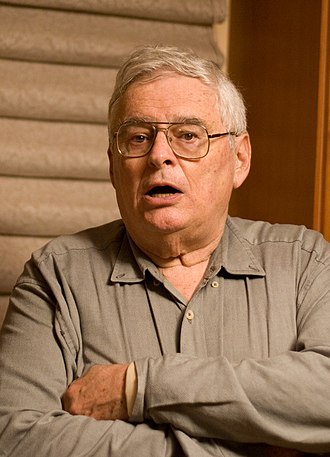 Jerry Fodor
"This monograph is about the current status of the program; not so much its evidential status (which I take to be, for the most part, an open question ) as what the program is and where it does, and doesnt, seem natural to try to apply it. Specifically I want to do the following things: (1) distinguish the general claim that there are psychological faculties from a particular version of that claim, which I shall call the modularity thesis; (2) enumerate some of the properties that modular cognitive systems are likely to exhibit in virtue of their modularity ; and (3) consider whether it is possible to formulate any plausible hypothesis about which mental processes are likely to be the modular ones. Toward the end of the discussion, Ill also try to do something by way of (4) disentangling the faculty jmodularity issues from what Ill call the thesis of Epistemic Boundedness: the idea that there are endogenously determined constraints on the kinds of problems that human beings can solve, hence on the kinds of things that we can know."
Jerry Alan Fodor was an American philosopher and the author of works in the fields of philosophy of mind and cognitive science. His writings in these fields laid the groundwork for the modularity of mind and the language of thought hypotheses, and he is recognized as having had "an enormous influence on virtually every portion of the philosophy of mind literature since 1960." At the time of his de
"I hate relativism. I hate relativism more than I hate anything else, excepting, maybe, fiberglass powerboats... surely, surely, no one but a relativist would drive a fiberglass powerboat."
Jerry Fodor"Philosophers who have wanted to banish the ghost from the machine have usually sought to do so by showing that truths about behavior can sometimes, and in some sense, logically implicate truths about mental states. In so doing, they have rather strongly suggested that the exorcism can be carried through only if such a logical connection can be made out. … [O]nce it has been made clear that the choice between dualism and behaviorism is not exhaustive, a major motivation for the defense of behaviorism is removed: we are not required to be behaviorists simply in order to avoid being dualists."
Jerry Fodor"FACULTY PSYCHOLOGY is getting to be respectable again after centuries of hanging around with phrenologists and other dubious types. By I mean, roughly , the view that many fundamentally different kinds of psychological mechanisms must be postulated in order to explain the facts of mental life . Faculty psychology takes seriously the apparent heterogeneity of the mental and is impressed by such prima facie differences as between, say, sensation and perception, volition and cognition, learning and remembering, or language and thought."
Jerry Fodor"[T]he degree of confirmation assigned to any given hypothesis is sensitive to properties of the entire belief system … simplicity, plausibility, and conservatism are properties that theories have in virtue of their relation to the whole structure of scientific beliefs taken collectively. A measure of conservatism or simplicity would be a metric over global properties of belief systems."
Jerry Fodor"The data that can bear on the confirmation of perceptual hypotheses includes, in the general case, considerably less than the organism may know."
Jerry Fodor"Suppose that the organism is given the problem of determining the analysis of a stimulus at a certain level of representation- e.g., the problem of determining which sequence of words a given utterance encodes. Since, in the general case, transducer outputs underdetermine perceptual analyses, we can think of the solution of such problems as involving processes of non-demonstrative inference. In particular, we can think of each input system as a computational mechanism which projects and confirms a certain class of hypotheses on the basis of a certain body of data."
Jerry Fodor"In the life of the mass-order, the culture of the generality tends to conform to the demands of the average human being. Spirituality decays through being diffused among the masses when knowledge is impoverished in every possible way by rationalisation until it becomes accessible to the crude understanding of all."
"I say this to you because we Spaniards are a forgetful people, because we are used to living for the moment, because we do not look back, because we do not know how to see the chain of heroes, because we do not contemplate the sum of sacrifices."
 Francisco Franco
"Sharon Tate was my best friend. Once, we were roommates. She introduced me to my husband. She was the godmother to my baby daughter who is named for her. In the six years time that I knew her, she never said an unkind word about anyone."
"Long time to see. (VS: Tapion)"
"Most mathematicians prove what they can, von Neumann proves what he wants." Once in a discussion about the rapid growth of mathematics in modern times, von Neumann was heard to remark that whereas thirty years ago a mathematician could grasp all of mathematics, that is impossible today. Someone asked him: "What percentage of all mathematics might a person aspire to understand today?" Von Neumann went into one of his five-second thinking trances, and said: "About 28 percent."
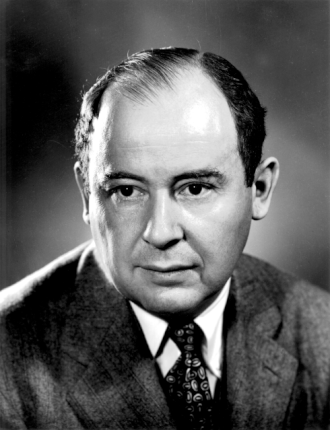 John von Neumann
"Children must be free to think in all directions irrespective of the peculiar ideas of parents who often seal their childrens minds with preconceived prejudices and false concepts of past generations. Unless we are very careful, very careful indeed, and very conscientious, there is still great danger that our children may turn out to be the same kind of people we are."