SHAWORDS

We are already experiencing huge cost externalities from population hy — Extinction

HomeExtinctionQuote
"We are already experiencing huge cost externalities from population hypergrowth and profligate fossil fuel use in the form of environmental devastation. Of the earth’s estimated 10 million species, 300,000 have vanished in the past fifty years. Each year, 3,000 to 30,000 species become extinct, an all-time high for the last 65 million years. Within one hundred years, between one-third and two-thirds of all birds, animals, plants, and other species will be lost. Nearly 25 percent of the 4,630 known mammal species are now threatened with extinction, along with 34 percent of fish, 25 percent of amphibians, 20 percent of reptiles, and 11 percent of birds. Even more, species are having population declines. Environmental scientists speak of an “omega point” at which the vast interconnected networks of Earth’s ecologies are so weakened that human existence is no longer possible."
Extinction
Extinction
Extinction
author

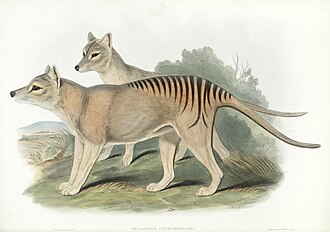
Extinction is the termination of a species via the death of its last member. A taxon may become functionally extinct before the death of its last member if it loses the capacity to reproduce and recover. As a species' potential range may be very large, determining this moment is difficult, and is usually done retrospectively. This difficulty leads to phenomena such as Lazarus taxa, where a species

More by Extinction

View all →
Quote
"Nature cannot be destroyed. Sixty-five million years ago, an asteroid wiped out the dinosaurs, but in so doing opened the way forward for mammals. Today, humankind is driving many [if not all] species into extinction and might even annihilate itself. But other organisms are doing quite well. Rats and cockroaches, for example, are in their heyday. These tenacious creatures would probably creep out from beneath the smoking rubble of a nuclear Armageddon, ready and able to spread their DNA. Perhaps 65 million years from now, intelligent rats will look back gratefully on the decimation wrought by humankind, just as we today can thank that dinosaur-busting asteroid."
ExtinctionExtinction
Quote
"[We] cannot bring back species from extinction… We are still driving 150 species to oblivion daily… Collapse will not change anything in our attitudes. As long as humans remain genetically identical to who they are today, I’m afraid they will collapse again, and again, after this coming collapse, and probably risk complete extinction. This is not speculation, but simply looking at historical evidence: over thousands of years we have collapsed pretty much constantly—anthropologists have documented the collapse of more than 82 (!!!) civilisations. We are now at the stage of a systemic, global collapse because we are one, united global economic machine that has used up everything on the planet. Our species is wired for growth, and we are designed to go through boom-and-bust cycles. What comes after the next bust will be a significantly smaller civilisation… There will be another, smaller boom, then collapse again. With each collapse many… “species” risk disappearance."
ExtinctionExtinction
Quote
"Species are threatened because of over-exploitation, habitat destruction, climate change, and so on. Efforts to reverse, or stall, a decline in population would have to go on indefinitely (i.e., would have to be sustainable) unless all of the factors involved in the decline are removed. But modernity is the cause of all of those factors, so conservation will inevitably fail until modernity ends (and then there would be no conservation efforts with humans needing to be more involved in saving their own lives). Sometimes, predators are excluded through complex fencing. But these are used to exclude predators which were introduced (either deliberately or accidentally) by humans into ecosystems which had never previously included them. The fencing has to be maintained constantly, may fail to be 100% effective all of the time. The fencing itself also excludes many of those species inside the fence from the area outside of the fence. So it’s an artificial ecosystem that requires management by humans (the worst predator of all). For ever. That is unsustainable and not much better than a wildlife park. Humans, of course, aren’t excluded as they can come and go via gates."
ExtinctionExtinction