Quote
"That in our proper motion we ascend Up to our native seat; descent and fall To us is adverse."
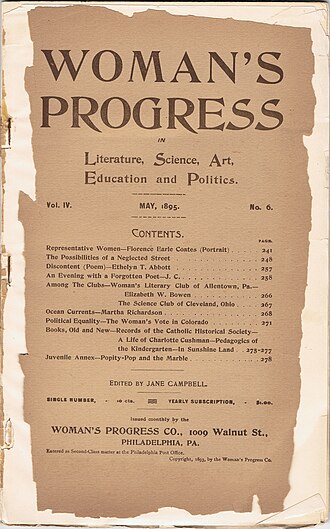 Progress
"We are either progressing or retrograding all the while; there is no such thing as remaining stationary in this life."
Progress is movement towards a perceived refined, improved, or otherwise desired state. It is central to the philosophy of progressivism, which interprets progress as the set of advancements in technology, science, and social organization – the latter being generally achieved through direct societal action, as in social enterprise or through activism, but being also attainable through natural soci
"That in our proper motion we ascend Up to our native seat; descent and fall To us is adverse."
Progress"He who moves not forward goes backward! A capital saying!"
Progress"We travel faster, and yet it takes us longer to get to work. ...when we traveled with the speed of about 8 miles per hour it took us an average of about 5-10 minutes to get to work; when we traveled with the speed of about 25 miles per hour, it took us about 20 minutes; when we travel nowadays with the speed of about 55 miles per hour it takes an average of about 45 minutes to reach work. Is this progress, or an illusion of progress? ... No doubt we buy and “consume” more books, records, reproductions, but most of them have become mere commodities. We are bombarded with new information, but we acquire no new knowledge, let alone new experience. Is this progress, or an illusion of progress?"
Progress"Mathematically, progress means that some new information is better than past information, not that the average of new information will supplant past information, which means that it is optimal for someone, when in doubt, to systematically reject the new idea, information, or method."
Progress"Within any city or state or civilization... the natural operation of time was to produce internal corruption; the ordinary expected routine thing was a process of decadence. This could even be observed in a parallel manner in the physical world, where bodies would decompose and the finest fabrics in nature would suffer putrefaction. In fact, the current science chimed in with the current view of nature, for in both these realms it was held that compound bodies had a natural tendency to disintegrate. ... The reassertion of these ancient ideas on the subject of the historical process helps to explain why at the Renaissance it was almost less possible to believe in what we call progress than it was in the middle ages. If anything it was more easy to believe of something of this sort in the realm of spiritual matters than in any other sphere—to believe in stages of time succeeding one another in an ascending series... and so to find meaning and purpose in the passage of time itself."
Progress"Even in the eighteenth century certain of the prevailing ideas or prejudices are awkward to reconcile with any scheme of history on the basis of progress. The regard for native reason, and the view that this was liable to be perverted by institutions, led to... daydreaming about the "" and the evils of civilization... as is illustrated in the writings of Rousseau."
Progress