Quote
"Die folgenden Untersuchungen wagen diesen Übergang zu einem radikal antihumanistischen, einem radikal antiregionalistischen und einem radikal konstruktivistischen Gesellschaftsbegriff."
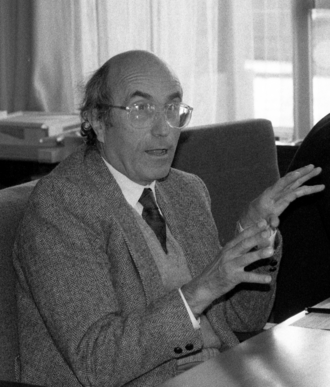 Niklas Luhmann
"We are still spellbound by a tradition that arranged psychological faculties hierarchically, relegating ‘sensuousness’ — that is, perception — to a lower position in comparison to higher, reflective functions of reason and understanding. The most advanced versions of ‘conceptual art’ still follow this tradition. By refusing to base themselves in sensuously perceptible distinctions between works of art and other objects, these works seek to avoid reducing art to the realm of sense perception."
Niklas Luhmann was a German sociologist, philosopher of social science, and systems theorist.
"Die folgenden Untersuchungen wagen diesen Übergang zu einem radikal antihumanistischen, einem radikal antiregionalistischen und einem radikal konstruktivistischen Gesellschaftsbegriff."
Niklas Luhmann"The effect if not the function of the mass media seems to lie, therefore, in the reproduction of non- transparency through transparency, in the reproduction of non-transparency of effects through transparency of knowledge."
Niklas Luhmann"Does knowledge rest on construction in the sense that it only functions because the knowing system is operatively closed, therefore: because it can maintain no operative contact with the outside world; and because it therefore remains dependent, for everything that it constructs, on its own distinction between self-reference and allo-reference?"
Niklas Luhmann"Niklas Luhmann is remembered as the most important social theorist of the 20th century. Yet in much of the Anglo-Saxon world he is virtually unknown among professional social scientists."
Niklas Luhmann"Humans cannot communicate; not even their brains can communicate; not even their conscious minds can communicate. Only communication can communicate."
Niklas Luhmann"The activity of observing establishes a distinction in a space that remains unmarked, the space from which the observer executes the distinction. The observer must employ a distinction in order to generate the difference between unmarked and marked space, and between himself and what he indicates. The whole point of this distinction (its intention) is to mark something as distinct from something else. At the same time, the observer — in drawing a distinction - makes himself visable to others. He betrays his presence - even if a further distinction is required to distinguish him."
Niklas Luhmann