Quote
"A sentence always means more. Even a single word, within the weave of incommensurable connotation, can, and usually does."
 George Steiner
"We come after. We know now that a man can read Goethe or Rilke in the evening, that he can play Bach and Schubert, and go to his days work at Auschwitz in the morning. To say that he has read them without understanding or that his ear is gross, is cant. In what way does this knowledge bear on literature and society, on the hope, grown almost axiomatic from the time of Plato to that of Matthew Arnold, that culture is a humanizing force, that the energies of spirit are transferable to those of conduct?"
Francis George Steiner, FBA was a French and American literary critic, essayist, philosopher, novelist and educator. He wrote extensively about the relationship between language, literature and society, as well as the impact of the Holocaust. A 2001 article in The Guardian described Steiner as a "polyglot and polymath".
"A sentence always means more. Even a single word, within the weave of incommensurable connotation, can, and usually does."
George Steiner"Almost alone among cognitive-aesthetic movements and strategies of interpretation, deconstruction neither champions any body of past literature or art, nor does it act as vanguard or advocate for any contemporary or incipient school. The New Criticism and T. S. Eliot strove for the revaluation of Metaphysical poetry so as to underwrite, in turn, certain tactics of modenity. Aristotle was advocate for Sophocles. Deconstruction is, intentionally, marginal (a key trope) to all histories of taste and manifestos for innovation."
George Steiner"Tragedy springs from outrage; it protests at the conditions of life. It carries in it the possibilities of disorder, for all tragic poets have something of the rebelliousness of Antigone. Goethe, on the contrary, loathed disorder. He once said that he preferred injustice, signifying by that cruel assertion not his support for reactionary political ideals, but his conviction that injustice is temporary and reparable whereas disorder destroys the very possibilities of human progress. Again, this is an anti-tragic view; in tragedy it is the individual instance of injustice that infirms the general pretence of order. One Hamlet is enough to convict a state of rottenness."
George Steiner"What lies beyond mans word is eloquent of God. That is the joyously defeated recognition expressed in the poems of St. John of the Cross and of the mystic tradition."
George Steiner"For it is a plain fact that, most certainly in the West, the writings, works of art, musical compositions which are of central reference, comport that which is "grave and constant" (Joyces epithets) in the mystery of our condition."
George Steiner"Literature and the arts are also criticism in a more particular and practical sense. They embody an expository reflection on, a value judgement of, the inheritance and context to which they pertain."
George Steiner"The wound is the place where the Light enters you."
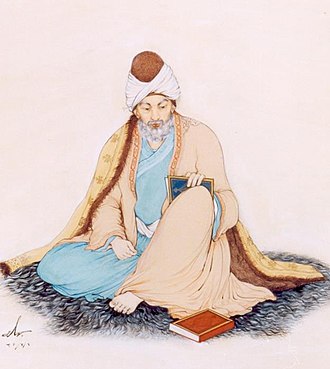 Rumi
Rumi"Be the change that you wish to see in the world."
 Mahatma Gandhi
"In philosophy equally as in poetry it is the highest and most useful prerogative of genius to produce the strongest impressions of novelty, while it rescues admitted truths from the neglect caused by the very circumstance of their universal admission."
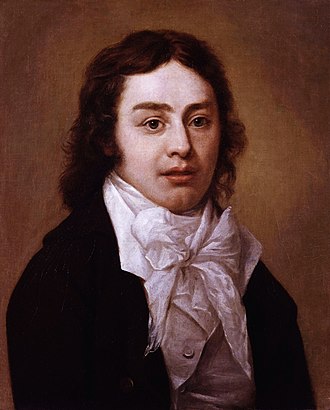 Samuel Taylor Coleridge
"An [hypertext] encyclopaedia will be an overall attempt by the knowledgeable, the learned societies or anyone else, to represent the state-of-the-art in their field. An encyclopaedia will be a living document, as up to date as it can be, instantly accessible at any time. It will contain carefully authored explanations and summaries of the subject, as well as computer-generated indexes of literature. A reference to a paper from the encyclopaedia conveys authority and acceptance by academic society. A measure of a paper’s standing may be conveyed by the number of links it is away from an encyclopaedia."
 Tim Berners-Lee
"The British intellectual tradition is empirical and liberal, the French is rationalist and aristocratic, and the German is idealist and conservative. ...In the great ontological debate between mind and matter, German philosophy comes down solidly on the side of mind. Its emphasis is intuition as opposed to reason, ideas as opposed to facts."
"To know the mighty works of God, to comprehend His wisdom and majesty and power; to appreciate, in degree, the wonderful workings of His laws, surely all this must be a pleasing and acceptable mode of worship to the Most High, to whom ignorance cannot be more grateful than knowledge."