SHAWORDS

We could no more have a universal world market than we could have a sy — David Graeber

"We could no more have a universal world market than we could have a system in which everyone who wasnt a capitalist was somehow able to to become a respectable, regularly paid wage laborer with access to adequate dental care. A world like that has never existed and never could exist. Whats more, the moment that even the prospect that this might happen begins to materialize, the whole system starts to come apart."
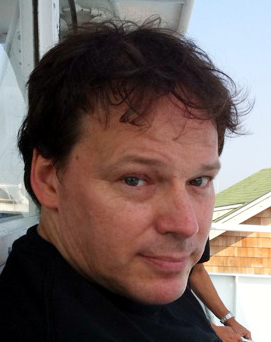
David Graeber
David Graeber
David Graeber
author

David Rolfe Graeber was an American anthropologist and anarchist social and political activist. His influential work in social and economic anthropology, particularly his books Debt: The First 5,000 Years (2011), The Utopia of Rules (2015), Bullshit Jobs (2018), and The Dawn of Everything (2021), and his leading role in the Occupy movement earned him recognition as one of the foremost anthropologi

More by David Graeber

View all →
Quote
"Marxist schools have authors. Just as Marxism sprang from the mind of Marx, so we have Leninists, Maoists, Trotksyites , Gramscians, Althusserians... (Note how the list starts with heads of state and grades almost seamlessly into French professors.) ... Now consider the different schools of anarchism. There are Anarcho-Syndicalists, AnarchoCommunists, Insurrectionists, Cooperativists, Individualists, Platformists... None are named after some Great Thinker; instead, they are invariably named either after some kind of practice, or most often, organizational principle. (Significantly, those Marxist tendencies which are not named after individuals, like Autonomism or Council Communism, are also the ones closest to anarchism.) Anarchists like to distinguish themselves by what they do, and how they organize themselves to go about doing it."
David GraeberDavid Graeber
Quote
"To take what might seem an "objective", macro-economic approach to the origins of the world economy would be to treat the behavior of early European explorers, merchants, and conquerors as if they were simply rational responses to opportunities—as if this were just what anyone would have done in the same situation. This is what the use of equations so often does: make it seem perfectly natural to assume that, if the price of silver in China is twice what it is in Seville, and inhabitants of Seville are capable of getting their hands on large quantities of silver and transporting it to China, then clearly they will, even if doing so requires the destruction of entire civilizations. Or if there is a demand for sugar in England, and enslaving millions is the easiest way to acquire labor to produce it, then it is inevitable that some will enslave them."
David GraeberDavid Graeber
Quote
"In societies based around small communities, where almost everyone is either a friend, a relative, or an enemy of everyone else, the languages spoken tend even to lack words that correspond to "self-interest" or "altruism" but include very subtle vocabularies for describing envy, solidarity, pride, and the like. Their economic dealings with one another likewise tend to be based on much more subtle principles. ... The work of destroying such ways of life is still often done by missionaries—representatives of those very world religions that originally sprang up in reaction to the market long ago. Missionaries, of course, are out to save souls; but they rarely interpret this to mean their role is simply to teach people to accept God and be more altruistic. Almost invariably, they end up trying to convince people to be more selfish and more altruistic at the same time. On the one hand, they set out to teach the "natives" proper work discipline, and try to get them involved with buying and selling products on the market, so as to better their material lot. At the same time, they explain to them that ultimately, material things are unimportant."
David GraeberDavid Graeber