SHAWORDS

We do not merely study the past: we inherit it, and inheritance brings — Roger Scruton

"We do not merely study the past: we inherit it, and inheritance brings with it not only the rights of ownership, but the duties of trusteeship. Things fought for and died for should not be idly squandered. For they are the property of others, who are not yet born."
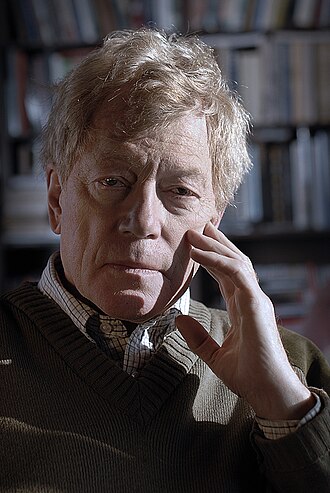
Roger Scruton
Roger Scruton
Roger Scruton
author44 quotes

Sir Roger Vernon Scruton was an English philosopher, writer, and social critic who specialised in aesthetics and political philosophy, particularly in the furtherance of conservative views. The founding-editor of The Salisbury Review, a conservative political journal, Scruton wrote over 50 books on architecture, art, philosophy, politics, religion, among other topics. Scruton was also Chairman of

More by Roger Scruton

View all →
Quote
"An international socialism is the stated ideal of most socialists; an international liberalism is the unstated tendency of the liberal. To neither system is it thinkable that men live, not by universal aspirations but by local attachments; not by a “solidarity” that stretches across the globe from end to end, but by obligations that are understood in terms which separate men from most of their fellows—in terms such as national history, religion, language, and the customs that provide the basis of legitimacy."
Roger ScrutonRoger Scruton

More on Study

View all →
Quote
"The knowledge of anything, since all things have causes, is not acquired or complete unless it is known by its causes. Therefore in medicine we ought to know the causes of sickness and health. And because health and sickness and their causes are sometimes manifest, and sometimes hidden and not to be comprehended except by the study of symptoms, we must also study the symptoms of health and disease. Now it is established in the sciences that no knowledge is acquired save through the study of its causes and beginnings, if it has had causes and beginnings; nor completed except by knowledge of its accidents and accompanying essentials. Of these causes there are four kinds: material, efficient, formal, and final."
A
Avicenna
Quote
"I had scarcely entered the room when I saw on my table an open book I had not put there. It was the works of Cardano. I did not intend to read it, but my gaze fell as though compelled on a story told by that philosopher. He writes that he was studying one night by candlelight when he saw two tall old men come in through the closed doors of his room. He asked them many questions, and they finally told him they were from the Moon; whereupon they disappeared. I was so surprised, both by the book that had put itself on my table and by the page it was open to, that I took this chain of events for an inspiration from God, who was urging me to tell people that the Moon is a world."
C
Cyrano de Bergerac
Quote
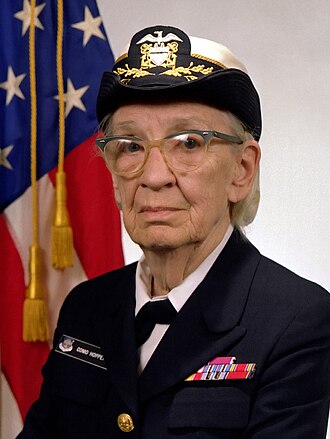
"We must include in any language with which we hope to describe complex data-processing situations the capability for describing data. We must also include a mechanism for determining the priorities to be applied to the data. These priorities are not fixed and are indicated in many cases by the data. Thus we must have a language and a structure that will take care of the data descriptions and priorities, as well as the operations we wish to perform. If we think seriously about these problems, we find that we cannot work with procedures alone, since they are sequential. We need to define the problem instead of the procedures. The Language Structures Group of the Codasyl Committee has been studying the structure of languages that can be used to describe data-processing problems. The Group started out by trying to design a language for stating procedures, but soon discovered that what was really required was a description of the data and a statement of the relationships between the data sets. The Group has since begun writing an algebra of processes, the background for a theory of data processing. Clearly, we must break away from the sequential and not limit the computers. We must state definitions and provide for priorities and descriptions of data. We must state relationships, not procedures."
Grace HopperGrace Hopper
Quote
"In biology the Cartesian view of living organisms as machines, constructed from separate parts, still provides the dominant conceptual framework. Although Descartes simple mechanistic biology could not be carried very far and had to be modified considerably during the subsequent three hundred years, the belief that all aspects of living organisms can be understood by reducing them to their smallest constituents, and by studying the mechanisms through which these interact, lies at the very basis of most contemporary biological thinking. This passage from a current textbook on modern biology is a clear expression of the reductionist credo: One of the acid tests of understanding an object is the ability to put it together from its component parts. Ultimately, molecular biologists will attempt to subject their understanding of cell structure and function to this sort of test by trying to synthesize a cell."
F
Fritjof Capra