SHAWORDS

We have come a long way from the classical ideal of objective descript — Atomic theory

"We have come a long way from the classical ideal of objective descriptions. In quantum mechanics the departure from this ideal has been even more radical. We can still use the objectifying language of classical physics to make statements about observable facts. For instance, we can say that a photographic plate has been blackened, or that cloud droplets have formed. But we can say nothing about the atoms themselves."
Atomic theory
Atomic theory
Atomic theory
author

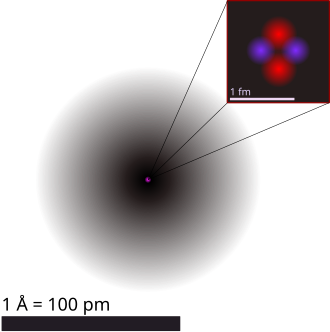
Atomic theory is the scientific theory that matter is composed of particles called atoms. The definition of the word "atom" has changed over the years in response to scientific discoveries. Initially, it referred to a hypothetical fundamental particle of matter, too small to be seen by the naked eye, that could not be divided. Then the definition was refined to being the basic particles of the che

More by Atomic theory

View all →
Quote
"The problem was that although ideas like statistical mechanics and the kinetic theory worked at the practical level to provide a mathematical description of what was going on, nobody had seen atoms—more to the point, given the technology of the time it was physically impossible to see atoms. This left the door open to for philosophers such as Ernst Mach to argue that the atomic hypothesis was no more than a hypothesis, what is known as a heuristic device, meaning just because things in the macroscopic world behave as if they were made of atoms that doesnt prove that they are... Mach regarded atoms as no more than a convenient fiction, which provided a basis for physicists to make calculations; anything that could not be detected by the human senses, he argued, was not the proper subject of scientific debate. Einstein disagreed, and argued the case for atoms with his friends. He became obsessed with the idea, and determined that if no one else could prove that atoms were real, he would do it himself."
Atomic theoryAtomic theory