Quote
"Though there hasn’t been a single case of polio in the United States since 1979, a significant number of people are still thought to be living with the after-effects."
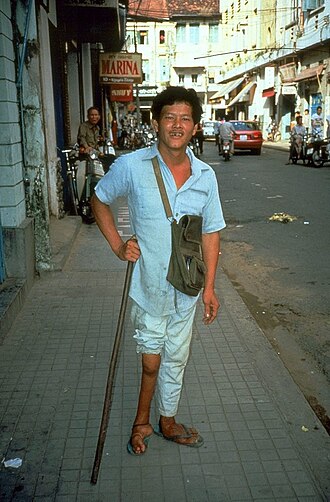 Polio
Polio"When I was around six years old, I woke up one morning and couldn’t get out of bed. My legs wouldn’t move. I was paralyzed from the waist down. This was during the polio era, in the early 1950s. My mother came in because I wasn’t ready for school. I remember the alarm in her eyes. In those days, doctors made house calls, and he entered my room carrying his black physician’s bag, sat on the edge of the bed, stuck a thermometer under my tongue, and checked my pulse. There was little else he could do. The terror of polio haunted children and parents everywhere. It was common to see young people in leg braces or wheelchairs; those imprisoned in iron lungs we only heard about. I was lucky. It wasn’t polio; it was possibly a severe allergic reaction to a tetanus shot I had had a few days before, caused by the tetanus antitoxin, which is harvested from horse blood. Horses were so important to the production of antibodies that many of the great pharmaceutical companies began as horse farms. It might also have been a dangerous disease called Guillain-Barré syndrome, an autoimmune disorder sometimes associated with infections such as influenza, Zika, and dengue fever—but so far not Covid-19. After a day or two, I could move my legs, but the memory was searing."
Poliomyelitis, commonly shortened to polio, is an infectious disease caused by the poliovirus. Approximately 75% of cases are asymptomatic; mild symptoms which can occur include sore throat and fever; in a proportion of cases more severe symptoms develop such as headache, neck stiffness, and paresthesia. These symptoms usually pass within one or two weeks. A less common symptom is permanent paraly
"Though there hasn’t been a single case of polio in the United States since 1979, a significant number of people are still thought to be living with the after-effects."
Polio"The only human infectious disease to be eradicated through vaccination is smallpox. Polio is on the verge of being eradicated, with cases of the wild (not vaccine derived) strain only found in Central Asia."
Polio"Some people assume that because diseases like polio have disappeared from the United States, it’s no longer necessary to vaccinate children against them. However, polio is still widespread in other parts of the world, and could easily begin re-infecting unprotected individuals if it were re-introduced to the country."
Polio"In the 1940s, scientists worked on vaccines against influenza, polio, measles, and other viruses deemed critical national security importance. That decade brought vaccines against influenza, which was then understood to be not just one virus, but several types of influenza virus for which different vaccines would be needed. Similarly, polio was understood to be three types of virus in the same group, so a vaccine against one type did not protect against the others."
Polio"The health benefits associated with relatively recent advances in vaccine therapy are well documented.To mention just a few: in 1921 there were nearly 207,000 reported cases of diphtheria in the United States. In 1991, there were two. In the same year, apart from a small number (five to ten) of vaccine-associated cases, there were no reported cases of poliomyelitis, as compared with more than twentyone thousand in 1952; “The CDC projects that the world will be polio-free by 2003."
Polio"The Salk vaccine trial successfully showed that the vaccine helped prevent paralytic polio, and licensure of the vaccine quickly followed. The disease that once paralyzed thousands of children has now been eliminated in the Western Hemisphere."
Polio