SHAWORDS

When I was seventeen I read everything by Robert Heinlein and Arthur C — Ray Bradbury

HomeRay BradburyQuote
"When I was seventeen I read everything by Robert Heinlein and Arthur Clarke, and the early writings of Theodore Sturgeon and Van Vogt — all the people who appeared in Astounding Science Fiction — but my big science-fiction influences are H. G. Wells and Jules Verne. I’ve found that I’m a lot like Verne — a writer of moral fables, an instructor in the humanities. He believes the human being is in a strange situation in a very strange world, and he believes that we can triumph by behaving morally. His hero Nemo — who in a way is the flip side of Melville’s madman, Ahab — goes about the world taking weapons away from people to instruct them toward peace."
R
Ray Bradbury
Ray Bradbury
author235 quotes

Ray Douglas Bradbury was an American author and screenwriter. One of the most celebrated 20th-century American writers, he worked in a variety of genres, including fantasy, science fiction, horror, mystery, and realistic fiction.

More on Education

View all →
Quote
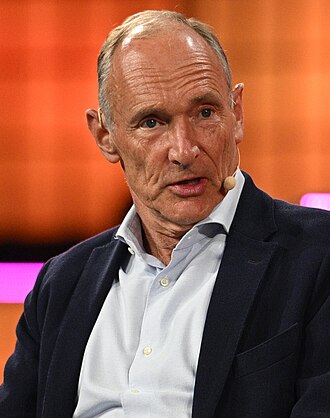
"An [hypertext] encyclopaedia will be an overall attempt by the knowledgeable, the learned societies or anyone else, to represent the state-of-the-art in their field. An encyclopaedia will be a living document, as up to date as it can be, instantly accessible at any time. It will contain carefully authored explanations and summaries of the subject, as well as computer-generated indexes of literature. A reference to a paper from the encyclopaedia conveys authority and acceptance by academic society. A measure of a paper’s standing may be conveyed by the number of links it is away from an encyclopaedia."
Tim Berners-LeeTim Berners-Lee
Quote
"A sample of the modern debate, which neatly summarizes the anti-reductionist position is provided by Grene (1974). She points out that in principle a one-level ontology—the belief, for example, that with increasing knowledge all science will become an account of the world in the language of, say, atomic events—contradicts itself. This is so because such a belief, to be meaningful, requires an ontology which admits both atomic events and cognition. Here at once a second level is smuggled in! It is logically possible... that there might be no levels in between those of atomic events and cognition (that in essence is Descartess position) but the sciences of chemistry and biology consist of some well-tested conjectures that there are such intermediate levels as are represented by molecules, cells, organelles, organs, and organisms."
O
Ontology
Quote
"All competent thinkers agree with Bacon that there can be no real knowledge except that which rests upon observed facts. This fundamental maxim is evidently indisputable if it is applied, as it ought to be, to the mature state of our intelligence. But, if we consider the origin of our knowledge, it is no less certain that the primitive human mind could not, and indeed ought not to, have thought in that way. For if, on the one hand, every Positive theory must necessarily be founded upon observations, it is, on the other hand, no less true that, in order to observe, our mind has need of some theory or other. If in contemplating phenomena we did not immediately connect them with principles, not only would it be impossible for us to combine these isolated observations, and therefore to derive profit from them, but we should even be entirely incapable of remembering facts, which would for the most remain unnoted by us. Thus there were two difficulties be overcome: the human mind had to observe in order to form real theories, and yet had to form theories of some sort before it could apply itself to a connected series of observations. The primitive human mind, therefore, found itself involved in a vicious circle, from which it would never have had any means of escaping, if a natural way of the difficulty had not fortunately found by the spontaneous development of Theological conceptions. ...chimerical hopes ..exaggerated ideas of mans importance in the universe to which the Theological Philosophy ...at the commencement, ...afforded an indispensable stimulus without the aid which we cannot, indeed, conceive how the primitive human mind would have been induced to undertake any arduous labours."
TheoryTheory