Quote
"Theres still no road map for what you do to make a vaccine in the midst of a devastating public health outbreak."
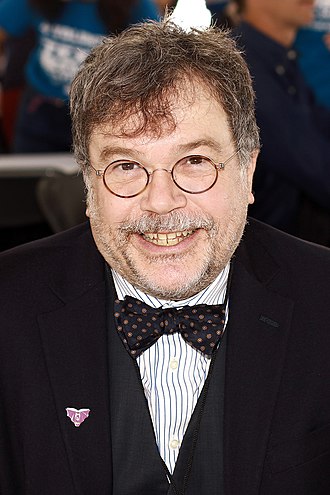 Peter Hotez
"When the Chinese started putting up the data on Bioarchive in January-February, we saw a very close homology between the two, and realized that we may be sitting on a very attractive Coronavirus vaccine. Now, were working... again with NIH, and were working with BARDA and others to get the funding, but now well have that lag. ...[T]hese clinical trials are not going to go that quickly because of that immune enhancement. Its going to take time. ...[U]nfortunsately, some of my colleagues in the biotech industry are making these inflated claims. ...[Y]ouve seen this... in the newspapers, "Were going to have this vaccine in weeks..." What theyre really seeing is that they can move a vaccine into clinical trials, but this will not go quickly because as we start vaccinating human volunteers, especially in areas where we have community transmission, were going to have to proceed very slowly, very cautiously. The FDA is on top of that. They have a great team in place at the . Theyre aware of the problem, but its not going to go quickly. We are going to have to follow this very slowly, cautiously, to make certain that were not seeing that immune enhancement. So now were hearing projections, a year, 18 months, who knows..."
Peter Jay Hotez is an American scientist, pediatrician, and advocate in the fields of global health, vaccinology, and neglected tropical disease control. He serves as founding dean of the National School of Tropical Medicine, Professor of Pediatrics and Molecular Virology & Microbiology at Baylor College of Medicine, where he is also Director of the Texas Children's Hospital Center for Vaccine Dev
"Theres still no road map for what you do to make a vaccine in the midst of a devastating public health outbreak."
Peter Hotez"Today, the NTDs represent the most common afflictions of people who live in extreme poverty. These ailments include diseases such as hookworm, , , and —or... the most important diseases youve never heard of. Virtually every impoverished individual is infected with at least one NTD."
Peter Hotez"[V]accines are safe and cannot possibly cause autism..."
Peter Hotez"[I]n Houston (and elsewhere in Texas) is an area known as the Fifth Ward... Driving... deep into this neighborhood reminded me of the terrible poverty I had seen... in destitute areas of Honduras, Guatemala, Brazil, and China. I saw... images... just like the standard global disease movie typically shown to first-year public health or medical students. ...It was even more astonishing when we turned our global health lens inward to study diseases that were infecting impoverished areas... [W]e found widespread NTDs... in Texas and elsewhere in the southern United States. ...NTDs are first and foremost diseases of acute poverty. ...[W]e determined that 12 million Americans who live at such poverty levels suffer from at least one NTD. The diseases include neglected parasitic infections such as , , , and ."
Peter Hotez"There is an urgency to create vaccines for diseases which dont make money."
Peter Hotez"In 2011, together with a team of 15 scientists, I relocated to Houston, Texas, to launch a new school devoted to poverty-related diseases. The National School of Tropical Medicine at is a joint venture among three biomedical institutions—Baylor, , and the —with a mission devoted to research on and training in the treatment of neglected tropical diseases, or NTDs..."
Peter Hotez