SHAWORDS

When we look back over the course of our nation’s history, what we see — Michelle Alexander

"When we look back over the course of our nation’s history, what we see again and again almost like clockwork are these predictable efforts by the wealthy elite to use race as a wedge. To pit poor whites against poor people of color for the benefit of the ruling elite. Many people don’t realize that even slavery as an institution—the emergence of an all-Black system of slavery—was to a large extent the result of plantation owners deliberately trying to pit poor whites against poor Blacks. And ensure that poor whites would not join in any kind of resistance, movement, struggle, or revolt with poor Blacks…"
Michelle Alexander
Michelle Alexander
Michelle Alexander
author6 quotes

Michelle Alexander is an American writer, attorney, and civil rights activist. She is best known for her 2010 book The New Jim Crow: Mass Incarceration in the Age of Colorblindness. Since 2018, she has been an opinion columnist for the New York Times.

More by Michelle Alexander

View all →
Quote
"I think it is precisely the existence of a relative few wealthy, successful African Americans like Barack Obama, Oprah Winfrey, and Colin Powell, and even Herman Cain, that creates this mirage of great racial progress even as a system like mass incarceration exists in which millions of poor folks of color are trapped in a permanent undercaste. I think that the existence of Black folks who can be offered as proof that “if you just try hard enough you can make it,” really creates, helps to immunize a system of mass incarceration from serious critique. The appearance that if you try hard enough you can make it, makes it difficult even for many Black folks to view our nation as one that would readily create and sustain a caste-like system again…"
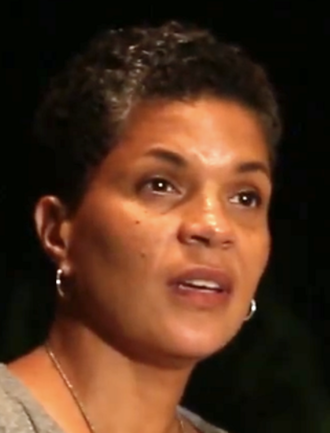
Michelle AlexanderMichelle Alexander
Quote
"What has changed since the collapse of Jim Crow has less to do with the basic structure of our society than with the language we use to justify it. In the era of colorblindness, it is no longer socially permissible to use race, explicitly, as a justification for discrimination, exclusion, and social contempt. So we don’t. Rather than rely on race, we use our criminal justice system to label people of color “criminals” and then engage in all the practices we supposedly left behind. Today it is perfectly legal to discriminate against criminals in nearly all the ways that it was once legal to discriminate against African Americans. Once you’re labeled a felon, the old forms of discrimination—employment discrimination, housing discrimination, denial of the right to vote, denial of educational opportunity, denial of food stamps and other public benefits, and exclusion from jury service—are suddenly legal. As a criminal, you have scarcely more rights, and arguably less respect, than a black man living in Alabama at the height of Jim Crow. We have not ended racial caste in America; we have merely redesigned it."
Michelle AlexanderMichelle Alexander