Quote
"Ἐὰν μὴ εἴπῃ ἐν τῇ καρδίᾳ αὐτοῦ ἄνθρωπος, ὅτι Ἐγὼ μόνος καὶ ὁ Θεὸς ἐσμὲν ἐν τῷ κόσμῳ, οὐχ ἕξει ἀνάπαυσιν."
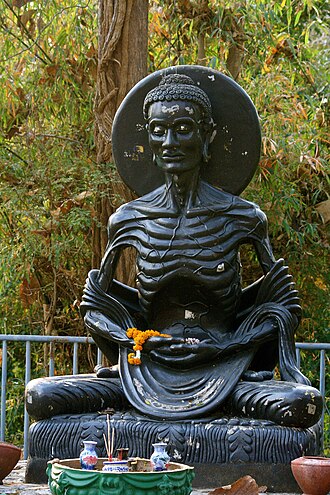 Asceticism
"Whereas some ascetics and Brahmins remain addicted to such unedifying conversation as about kings, robbers, ministers, armies, dangers, wars, food, drink, clothes, beds, garlands, perfumes, relatives, carriages, villages, towns and cities, countries, women, heroes, street- and well-gossip, talk of the departed, desultory chat, speculations about land and sea, talk about being and non-being, the ascetic Gotama refrains from such conversation."
Asceticism is a lifestyle characterized by abstinence from worldly pleasures through self-discipline, self-imposed poverty, and simple living, often for the purpose of pursuing spiritual goals. Ascetics may withdraw from the world or continue to be part of their society, but typically adopt a frugal lifestyle, characterized by the renunciation of material possessions and physical pleasures, and al
"Ἐὰν μὴ εἴπῃ ἐν τῇ καρδίᾳ αὐτοῦ ἄνθρωπος, ὅτι Ἐγὼ μόνος καὶ ὁ Θεὸς ἐσμὲν ἐν τῷ κόσμῳ, οὐχ ἕξει ἀνάπαυσιν."
Asceticism"I so detached my heart from the world and cut short my hopes that for thirty years now I have performed each prayer as though it were my last and I were praying the prayer of farewell."
Asceticism"Ascetic ideals reveal so many bridges to independence that a philosopher is bound to rejoice and clap his hands when he hears the story of all those resolute men who one day said No to all servitude and went into some desert."
Asceticism"A person of sharp observation and sound judgment rules over objects and keeps objects from ruling him."
Asceticism"Have you thought about what life-weariness means? That life-weariness emerges just when everything finite is taken away from a person although he is still allowed to retain life, that then everything around him becomes desolate and empty and repugnant, time becomes so indescribably long, indeed, that to him it is as if he were dead – yes, self-denial calls this dying to the world – and the truth teaches that a person must die to finitude (to its pleasure, its preoccupations, its projects, its diversions), must go through this death to life, must taste (as it is said, to taste death) and realize how empty is that with which busyness fills up life, how trivial is that which is the lust of the eye and the craving of the carnal heart. Alas, the natural man understands the matter exactly the opposite way. He thinks that the eternal is the empty. Certainly there is no drive so strong in a human being as that with which he clings to life – when death comes, we all pray that we may be allowed to live, but self-denial’s dying to the world is just as bitter as death. And in the house of the Lord you get to know the truth that you must die to the world, and if God has found (which, of course, is unavoidable) that you have learned this, then in all eternity no escape will help you. Therefore take care when you go to the house of the Lord."
Asceticism"The peculiar, withdrawn attitude of the philosopher, world denying, hostile to life, suspicious of the senses, freed from sensuality, which has been maintained down to the most modern times and has become virtually the philosopher’s pose par excellence—is above all a result of the emergency conditions under which philosophy arose and survived at all; for the longest time, philosophy would not have been possible at all on earth without ascetic wraps and cloaks, without an ascetic self-misunderstanding. To put it vividly: the ascetic priest provided until the most modern times the repulsive and gloomy caterpillar form in which alone the philosopher could live and creep about."
Asceticism