Quote
"The value of history ... is that it teaches us what man has done and thus what man is."
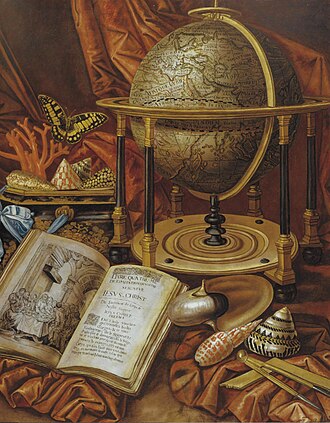 History
"While there is contest about the meaning of the past, of the precise relevance of law’s history, to its present, there is little dispute about the place of an historical sensibility in legal decision making. Yet as we turn from history to memory this consensus disappears. To turn from history to memory is to move from the disciplined effort to marshal evidence about the “truth” of the past to the slippery terrain on which individuals and groups invent traditions and record partisan versions of the past on the basis of which they seek to construct particular conditions in the present. “Memory,” Pierre Nora writes, is life, borne by living societies founded in its name. It remains in permanent evolution, open to the dialectic of remembering and forgetting, unconscious of its successive deformations, vulnerable to manipulation and appropriation. . . . [H]istory on the other hand, is the reconstruction . . . of what is no longer. . . . History, because it is an intellectual and secular production, calls for analysis and criticism. . . . At the heart of history is a critical discourse that is antithetical to . . . memory."
History is the systematic study of the past, focusing primarily on the human past. As an academic discipline, it analyses and interprets evidence to construct narratives about what happened and explain why it happened. Some theorists categorize history as a social science, while others see it as part of the humanities or consider it a hybrid discipline. Similar debates surround the purpose of hist
"The value of history ... is that it teaches us what man has done and thus what man is."
History"We tend to view history not as it was, but as we think it should have been."
History"Revolutionaries see history as a creation of their own spirit."
History"History will be kind to me, for I intend to write it."
History"The difference of development, North and South, is explained as a sort of working out of cosmic social and economic law. ... In this sweeping mechanistic interpretation, there is no room for the real plot of the story, for the clear mistake and guilt of building a new slavery of the working class in the midst of a fateful experiment in democracy."
History"Journalism is the first rough draft of history."
History