Quote
"Cold, delicately as the dark snow, A foxs nose touches twig, leaf; Two eyes serve a movement, that now And again now, and now, and now Sets neat prints into the snow."
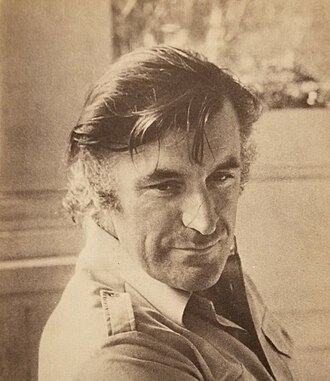 Ted Hughes
"Why do human beings need to confess? Maybe if you don’t have that secret confession, you don’t have a poem — don’t even have a story. Don’t have a writer. If most poetry doesn’t seem to be in any sense confessional, it’s because the strategy of concealment, of obliquity, can be so compulsive that it’s almost entirely successful."
Edward James Hughes was an English poet, translator, and children's writer. Critics frequently rank him as one of the best poets of his generation and one of the twentieth century's greatest writers. He was appointed Poet Laureate in 1984 and held the office until his death. In 2008, The Times ranked Hughes fourth on its list of "The 50 greatest British writers since 1945".
"Cold, delicately as the dark snow, A foxs nose touches twig, leaf; Two eyes serve a movement, that now And again now, and now, and now Sets neat prints into the snow."
Ted Hughes"With a sudden sharp hot stink of fox, It enters the dark hole of the head. The window is starless still; the clock ticks, The page is printed."
Ted Hughes"This house has been far out at sea all night, The woods crashing through darkness, the booming hills, Winds stampeding the fields under the window Floundering black astride and blinding wet Till day rose; then under an orange sky The hills had new places, and wind wielded Blade-light, luminous black and emerald, Flexing like the lens of a mad eye."
Ted Hughes"Pike, three inches long, perfect Pike in all parts, green tigering the gold. Killers from the egg: the malevolent aged grin."
Ted Hughes"The world rolls under the long thrust of his heel. Over the cage floor the horizons come."
Ted Hughes"However rootedly national it may be, poetry is less and less the prisoner of its own language. It is beginning to represent as an ambassador, something far greater than itself. Or perhaps, it is only now being heard for what, among other thngs, it is — a universal language of understanding, coherent behind the many languages in which we can all hope to meet. … We now give more serious weight to the words of a countrys poets than to the words of its politicians — though we know the latter may interfere more drastically with our lives. Religions, ideologies, mercantile competition divide us. The essential solidarity of the very diverse poets of the world, besides being mysterious fact is one we can be thankful for, since its terms are exclusively those of love, understanding and patience. It is one of the few spontaneous guarantees of possible unity that mankind can show, and the revival of an appetite for poetry is like a revival of an appetite for all mans saner possibilities, and a revulsion from the materialist cataclysms of recent years and the worse ones which the difference of nations threatens for the years ahead. The idea of global unity is not new, but the absolute necessity of it has only just arrived, like a sudden radical alteration of the sun, and we shall have to adapt or disappear. If the nations are ever to make a working synthesis of their ferocious contradictions, the plan will be created in spirit before it can be formulated or accepted in political fact. And it is in poetry that we can refresh our hope that such a unity is occupying peoples imaginations everywhere, since poetry is the voice of spirit and imagination and all that is potential, as well as of the healing benevolence that used to be the privilege of the gods."
Ted Hughes